Process Engineering Publications

Technical guides covering autoclave design, scale-up criteria, WFI systems design, and process safety barriers.

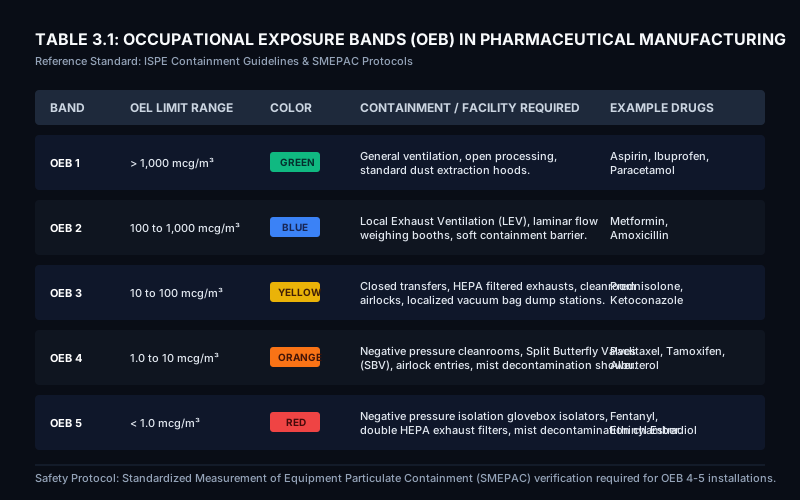
Occupational Exposure Bands (OEB) in Pharma: What Engineers Must Know
Process Safety
7 min read

Occupational Exposure Bands (OEB) in Pharma: What Engineers Must Know

Biopharmaceutical and API facilities handle highly potent active pharmaceutical ingredients (HPAPIs). Exposure to even microgram quantities of these compounds can cause severe health issues for plant operators.

Process SafetyOEBHPAPIContainmentIndustrial Hygiene
Kiran Seepana 0 0
Management of Change (MOC) in Pharma: Why It Fails and How to Prevent It
Process Safety
8 min read

Management of Change (MOC) in Pharma: Why It Fails and How to Prevent It

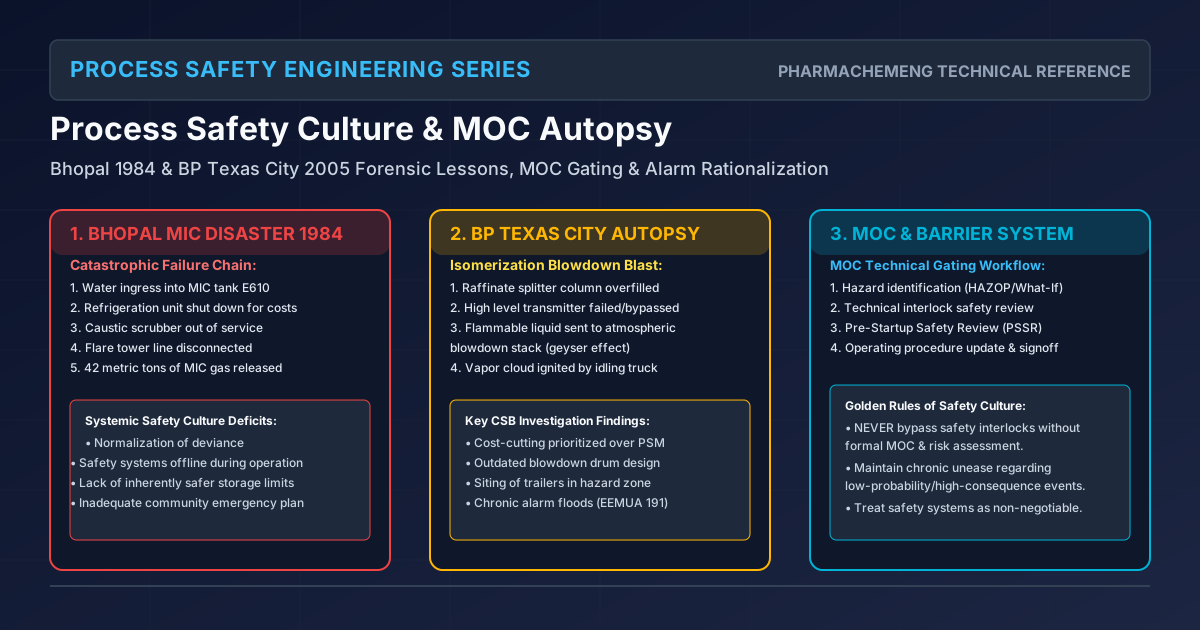
One of the leading causes of industrial process incidents is the failure of the Management of Change (MOC) process. Modifications to piping, software control logic, or operating conditions can introduce unforeseen hazards.

Process SafetyMOCManagement of ChangeChange ControlOperations
Kiran Seepana 1 0
Inherently Safer Design (ISD) Principles in Pharma Process Development
Process Safety
9 min read

Inherently Safer Design (ISD) Principles in Pharma Process Development

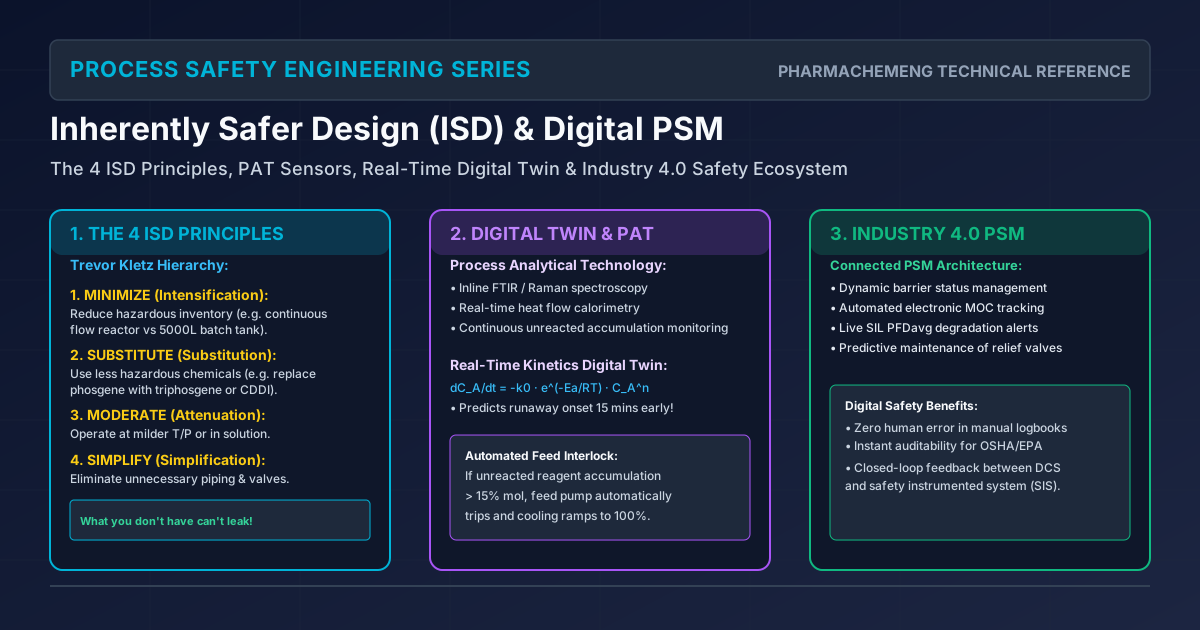
Traditionally, chemical plants manage process hazards by adding safety systems (PSVs, interlocks, dump tanks). However, these add-on barriers can fail. Inherently Safer Design (ISD) is a design philosophy that focuses on eliminating or minimizing hazards.

Process SafetyInherently Safer DesignISDProcess DevelopmentSafety by Design
Kiran Seepana 0 0
Static Electricity Hazards in Pharmaceutical Solvent Handling
Process Safety
6 min read

Static Electricity Hazards in Pharmaceutical Solvent Handling

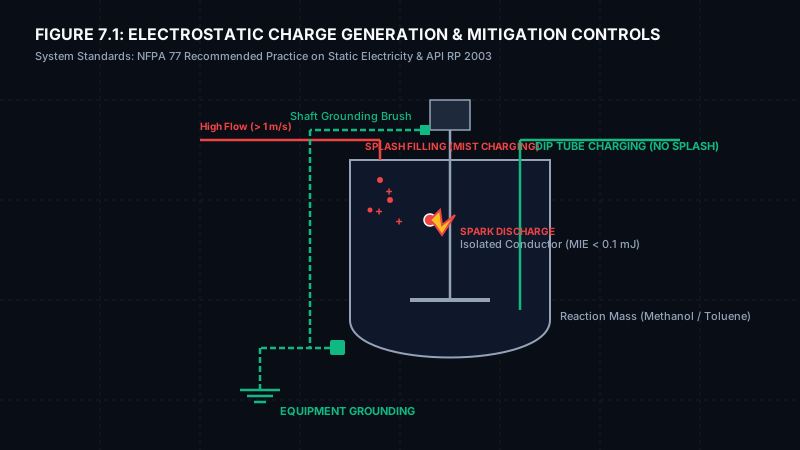
Avoid electrostatic ignitions during solvent transfers. Learn about charge generation, grounding/bonding requirements, relaxation times, and piping safety rules.

Process SafetyStatic ElectricityGroundingSolvent TransferExplosion Prevention
Kiran Seepana 0 0
Industrial Dust Collector System Design in Chemical & API Manufacturing: Baghouse Sizing, Air-to-Cloth Ratio, Duct Hydraulics & Safety
Process Safety
11 min read

Industrial Dust Collector System Design in Chemical & API Manufacturing: Baghouse Sizing, Air-to-Cloth Ratio, Duct Hydraulics & Safety

A comprehensive chemical engineering guide to industrial dust collection system design in API and specialty chemical plants. Details baghouse sizing, Air-to-Cloth (A/C) ratio, duct transport velocity, canister velocity, explosion venting (NFPA 68), filter media selection, and downloadable Excel calculator resource.

Dust CollectorBaghouse SizingAir to Cloth RatioNFPA 68Combustible DustDuct VelocityProcess Safety
Kiran Seepana 0 0
OSHA PSM 29 CFR 1910.119: What Pharma Engineers Must Know
Process Safety
7 min read

OSHA PSM 29 CFR 1910.119: What Pharma Engineers Must Know

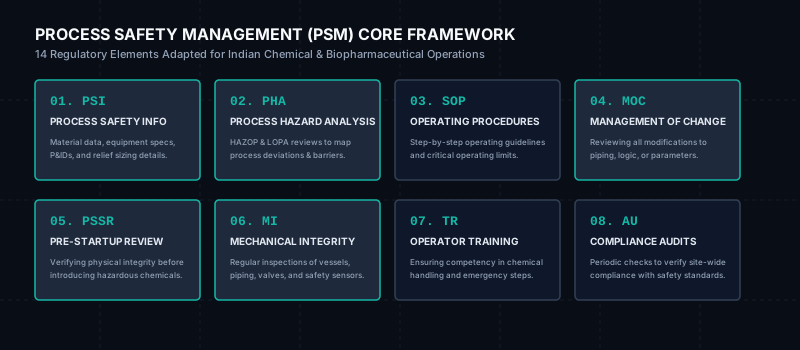
The US Occupational Safety and Health Administration (OSHA) enforces the Process Safety Management (PSM) standard to prevent catastrophic releases of highly hazardous chemicals (HHCs).

Process SafetyOSHA PSMProcess Safety ManagementComplianceSafety Regulations
Kiran Seepana 0 0
Safety Instrumented Systems (SIS): IEC 61511 for Pharma Engineers
Process Safety
9 min read

Safety Instrumented Systems (SIS): IEC 61511 for Pharma Engineers

When physical relief devices (like PSVs) cannot handle runaway reactions or toxic releases, process designs rely on Safety Instrumented Systems (SIS). An SIS is an independent system of sensors, logic solvers, and final control elements (valves).

Process SafetySISIEC 61511Functional SafetySafety Interlocks
Kiran Seepana 0 0
Chemical Compatibility & Reactivity Matrices in Process Manufacturing: CCPS Chemical Reactivity Worksheet (CRW) & Functional Group Hazardous Interactions
Process Safety
12 min read

Chemical Compatibility & Reactivity Matrices in Process Manufacturing: CCPS Chemical Reactivity Worksheet (CRW) & Functional Group Hazardous Interactions

A comprehensive chemical engineering guide to building chemical compatibility charts and assessing reactive chemical hazards. Details the CCPS & NOAA Chemical Reactivity Worksheet (CRW) methodology, functional group incompatibility mechanisms (gas evolution, thermal runaway, polymerization), binary compatibility matrices, and a downloadable Excel calculator.

Chemical CompatibilityCCPS CRWReactivity MatrixFunctional GroupsIsocyanatesProcess SafetyOSHA PSM
Kiran Seepana 0 0
Explosion Venting Design: NFPA 68 Calculations, Pressure Dynamics & Vent Sizing for Process Equipment
Process Safety
10 min read

Explosion Venting Design: NFPA 68 Calculations, Pressure Dynamics & Vent Sizing for Process Equipment

A rigorous process safety engineering guide to deflagration vent sizing per NFPA 68:2023. Covers Kst dust explosibility, unvented Pmax vs reduced Pred pressures, L/D elongation factors, vent duct backpressure, reaction recoil forces, and worked sizing examples for Fluid Bed Dryers (FBD) and ANFDs.

NFPA 68Explosion VentingCombustible DustProcess SafetyFluid Bed DryerANFDDust ExplosionDeflagration Sizing
Kiran Seepana 0 0
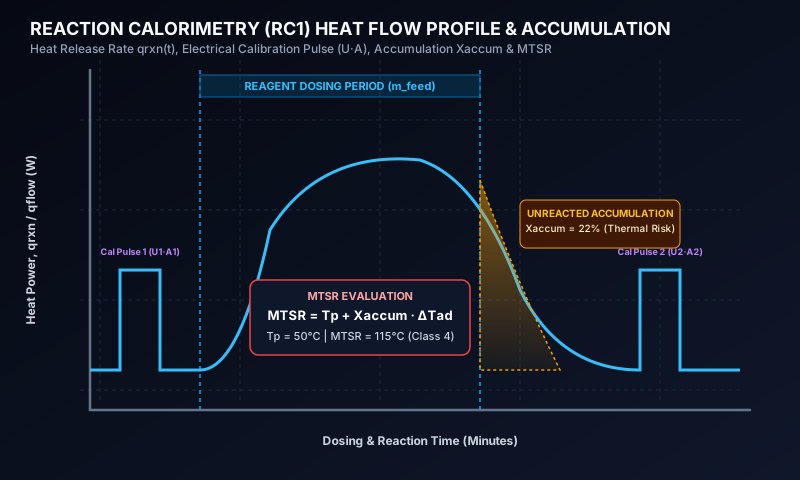
Reaction Hazard Assessment: The Framework Before Any Scale-Up
Process Safety
7 min read

Reaction Hazard Assessment: The Framework Before Any Scale-Up

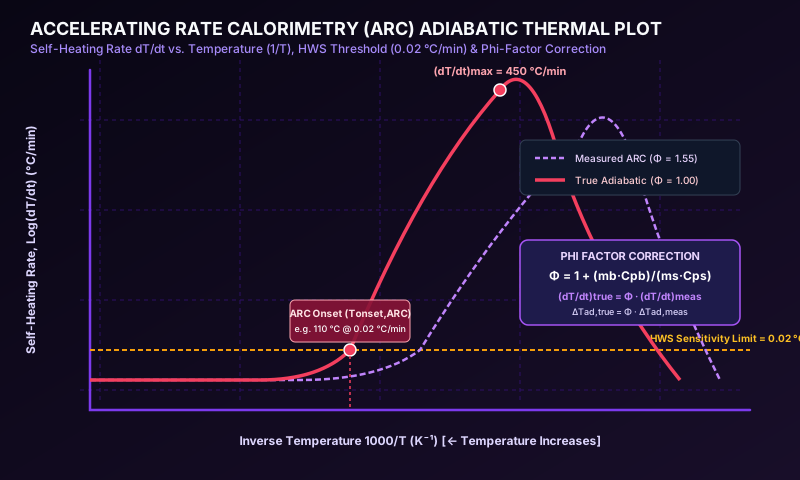
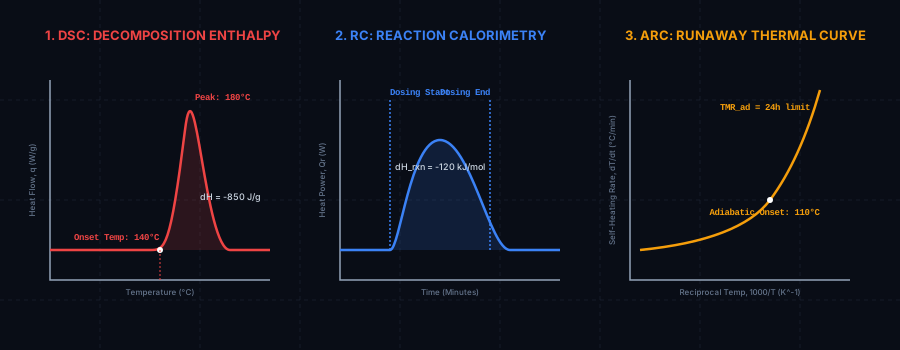
Conduct safety assessments for exothermic chemical reactions. Master reaction calorimetry (RC1), differential scanning calorimetry (DSC), Stoessel criticality indexes, and regulatory compliance.

Process SafetyReaction HazardsCalorimetryThermal SafetyScale-Up
Kiran Seepana 0 0
Relief Valve Sizing: API 520/521 for Process Engineers
Process Safety
6 min read

Relief Valve Sizing: API 520/521 for Process Engineers

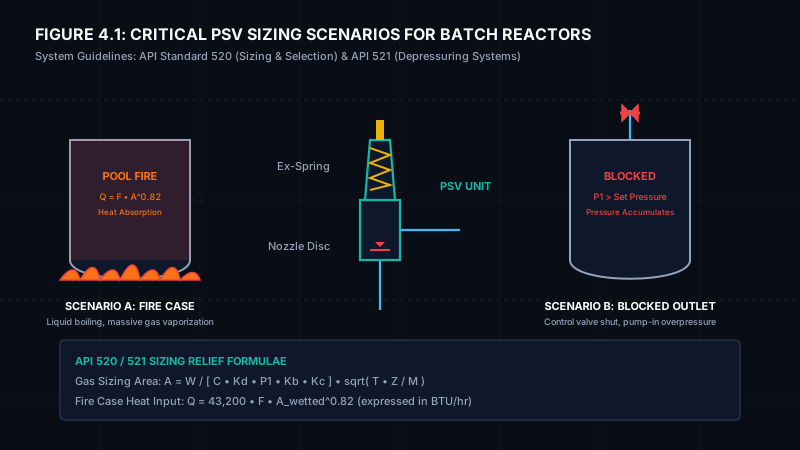
Learn the step-by-step process of sizing pressure safety valves (PSVs) under API 520/521. Identify overpressure scenarios, calculate relieving rates, and determine orifice areas.

Process SafetyRelief ValvesPSV SizingAPI 520Pressure Relief
Kiran Seepana 0 0
Digitalizing HAZOP & LOPA with Minimal Overhead: A Practical Chemical Engineering Guide to Open-Standard Process Hazard Analysis
Process Safety
12 min read

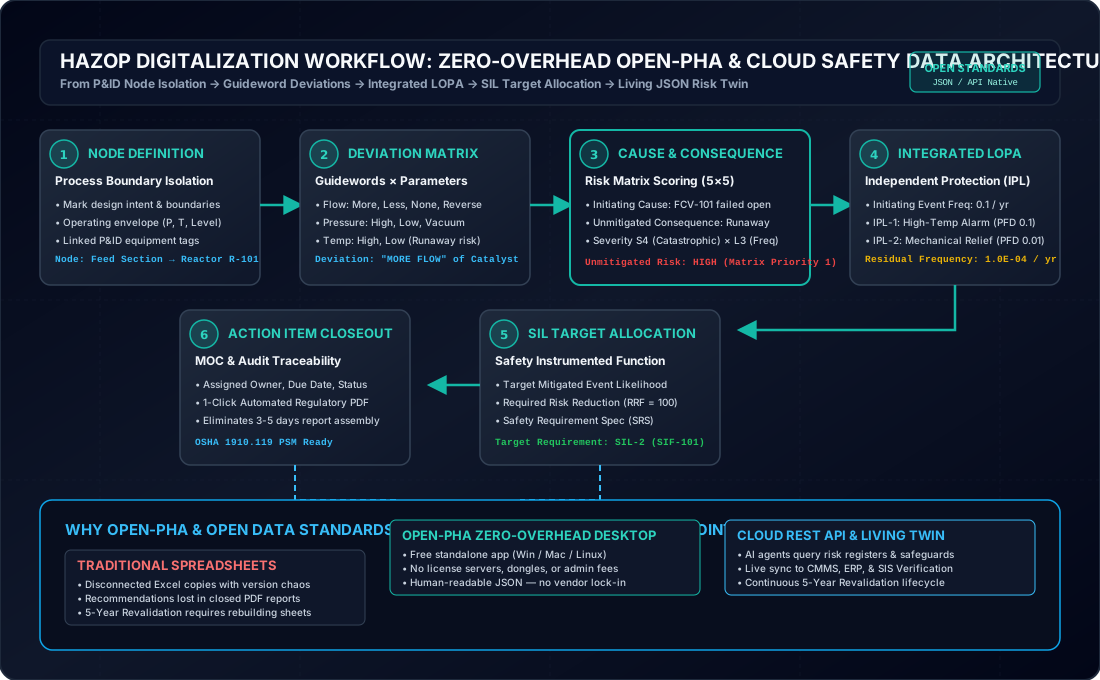
Digitalizing HAZOP & LOPA with Minimal Overhead: A Practical Chemical Engineering Guide to Open-Standard Process Hazard Analysis

A comprehensive chemical engineering guide on transitioning from spreadsheet chaos to modern, open-standard digital HAZOP and LOPA workflows using minimal-setup tools like Kenexis Open-PHA. Covers P&ID node boundary isolation, cause-consequence linking, IPL credits, SIL target allocation, automated reporting, and 5-year OSHA PSM revalidations.

HAZOPProcess Hazard AnalysisLOPAOpenPHAKenexisProcess Safety ManagementOSHA PSMSIL AllocationIEC 61511Independent Protection LayersChemical EngineeringProcess Automation
Kiran Seepana 0 0
Dust Explosion Hazard in Pharma Solid Dose Manufacturing
Process Safety
8 min read

Dust Explosion Hazard in Pharma Solid Dose Manufacturing

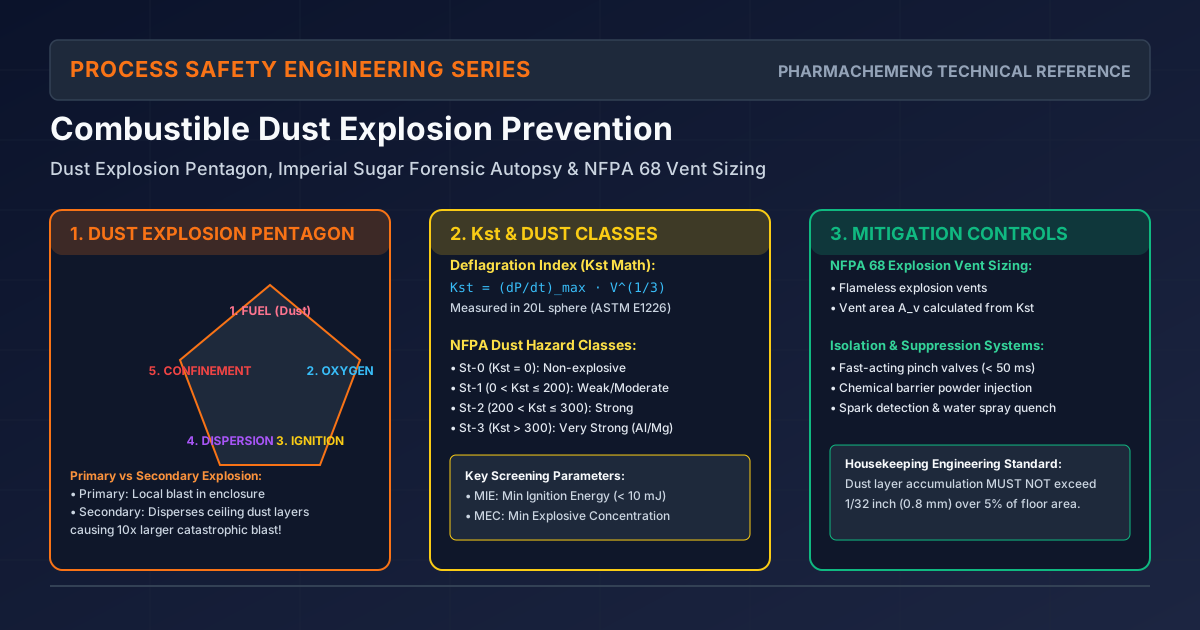
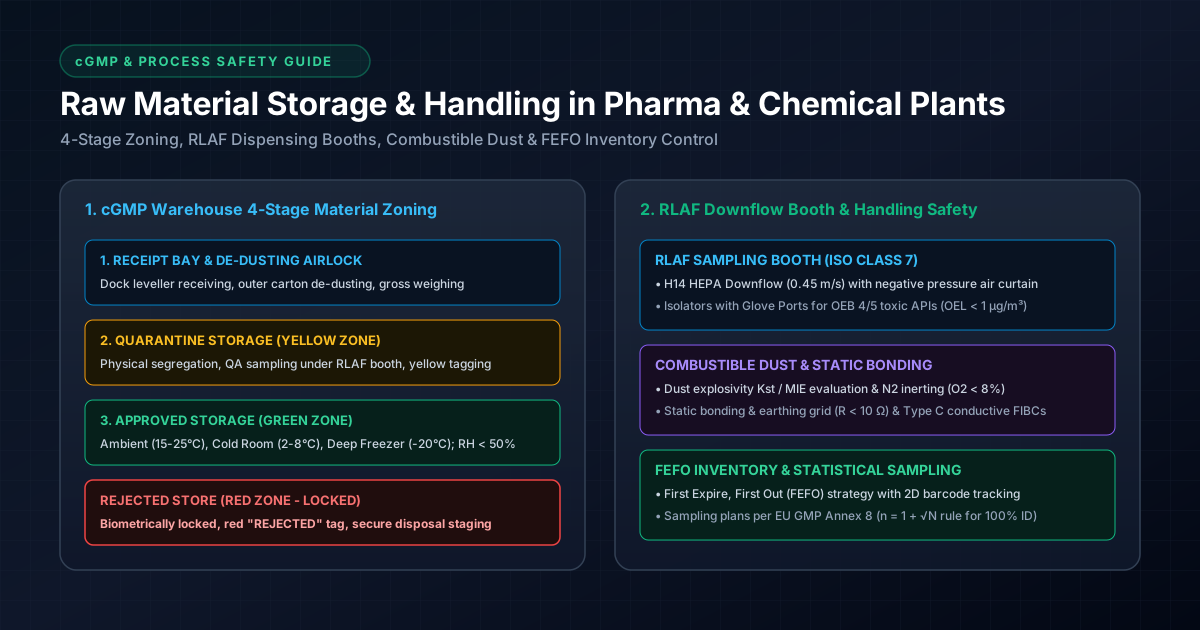
In pharmaceutical solid dose manufacturing, many raw materials, active pharmaceutical ingredients (APIs), and excipients are combustible organic powders. Operations like milling, sifting, blending, and tableting generate fine dust clouds.

Process SafetyDust ExplosionsCombustible DustSolid DoseExplosion Prevention
Kiran Seepana 0 0
HAZOP Study: A Practical Guide for Process Engineers
Process Safety
8 min read

HAZOP Study: A Practical Guide for Process Engineers

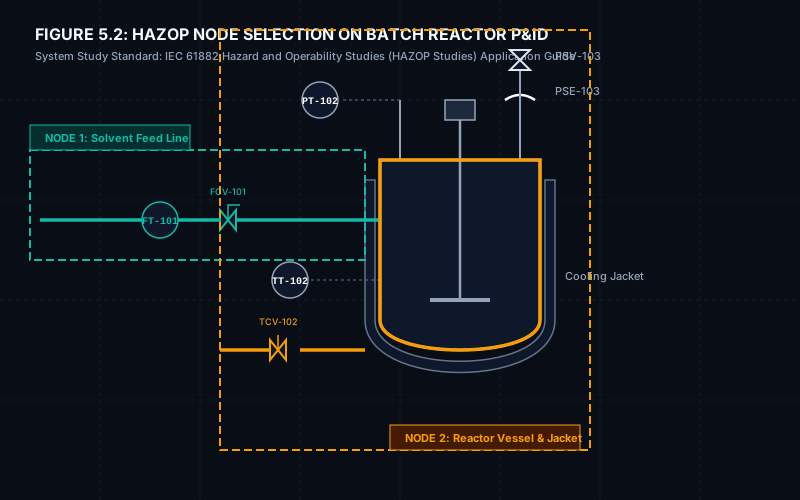
A comprehensive, step-by-step HAZOP study guide for process engineers. Covers P&ID node boundary selection, guideword-parameter matrices, a 5x5 Risk Ranking Matrix, a complete 5,000 L batch reactor worksheet, and LOPA/SIL alignment.

Process SafetyHAZOPRisk AssessmentProcess DesignSafety Engineering
Kiran Seepana 0 0
Runaway Reaction Risks and Technology Transfer in Multipurpose Process Equipment: Thermal Hazards, Advanced Instrumentation, and Safety Control Logics
Process Safety
12 min read

Runaway Reaction Risks and Technology Transfer in Multipurpose Process Equipment: Thermal Hazards, Advanced Instrumentation, and Safety Control Logics

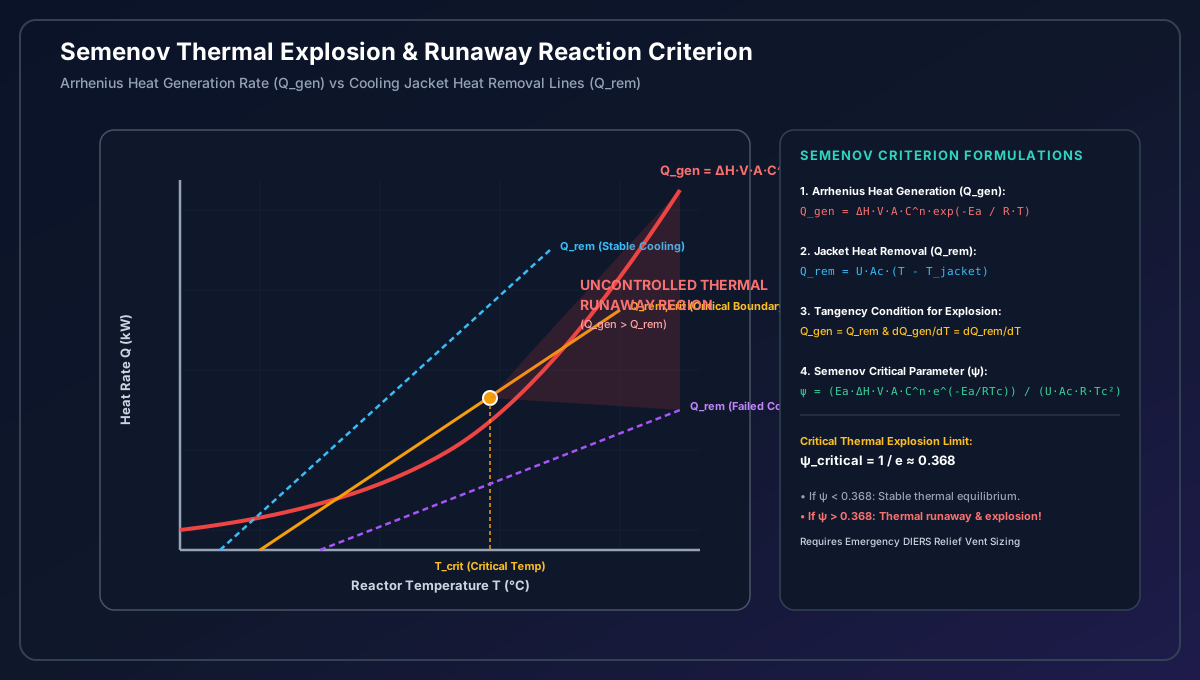
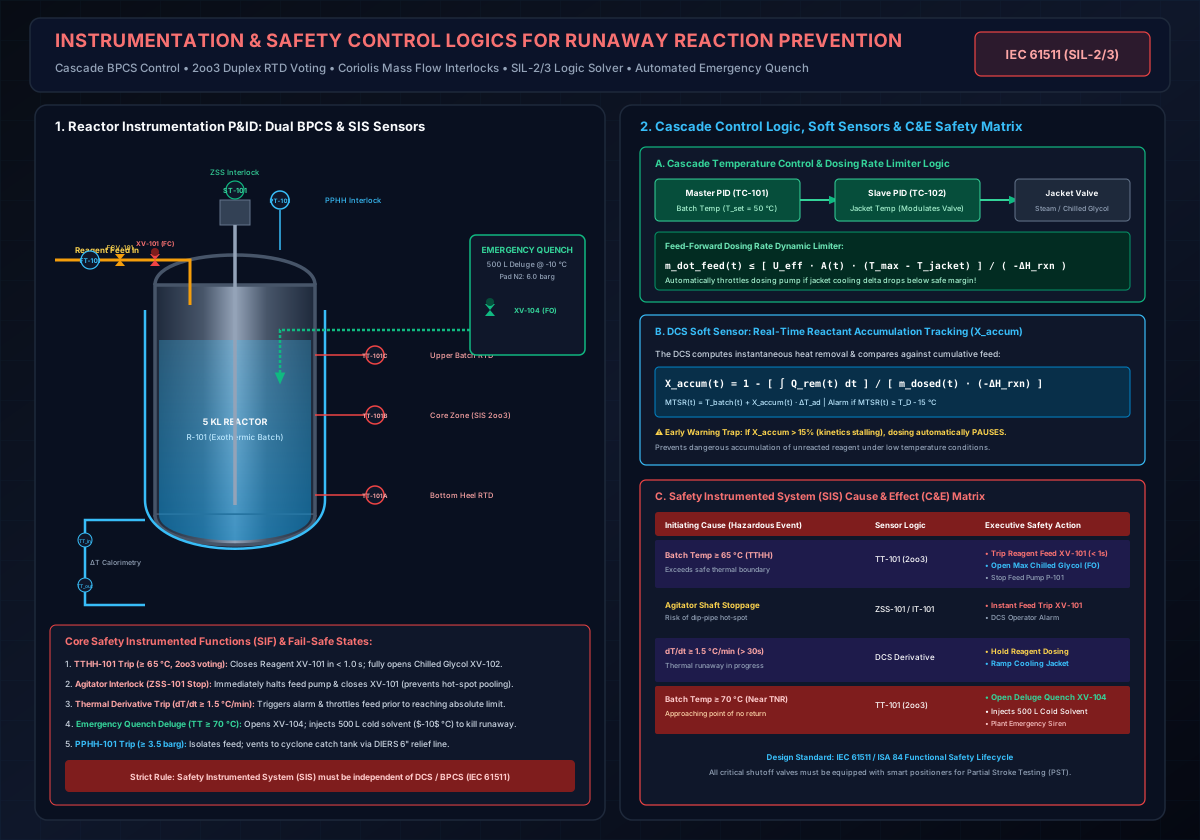
An authoritative chemical engineering guide on managing runaway reaction risks during technology transfer in multipurpose pharma/API equipment, covering Arrhenius kinetics, Semenov TNR theory, Stoessel criticality, field instrumentation (2oo3 RTDs, Coriolis meters), cascade control loops, soft sensors, SIS / SIL-2 interlocks, and automated emergency quench systems.

Process SafetyTechnology TransferRunaway ReactionsInstrumentationSIS / SIL-2Cascade ControlCalorimetryRC1eARCScale-UpDIERSStoessel CriticalityAPI Manufacturing
Kiran Seepana 0 0
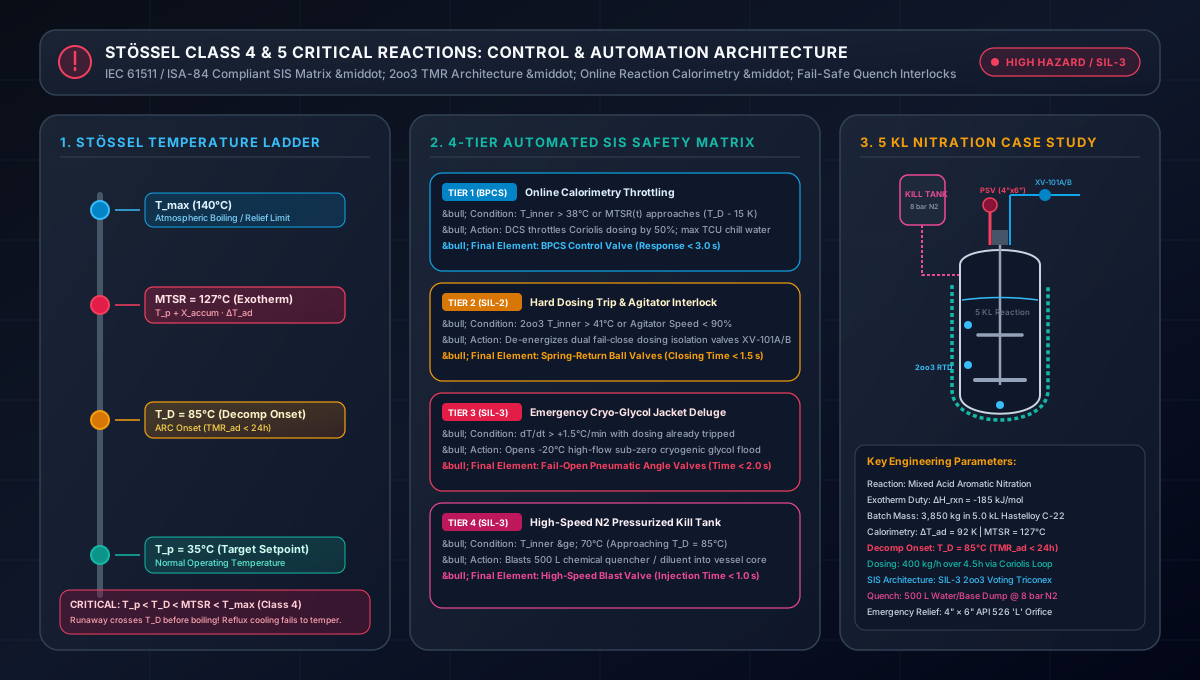
Process Control, Instrumentation & SIL Automation for Stössel Class 4 & 5 Critical Chemical Reactions
Process Safety
12 min read

Process Control, Instrumentation & SIL Automation for Stössel Class 4 & 5 Critical Chemical Reactions

An authoritative chemical engineering guide on executing Stössel Criticality Class 4 and 5 high-hazard reactions, covering RC1e/ARC reaction calorimetry, 2oo3 TMR field instrumentation, online reaction calorimetry soft-sensors, SIL-2/SIL-3 interlocks, automated chemical quench systems, and an industrial 5 kL nitration case study.

Process SafetyStoessel CriticalityRunaway ReactionsReaction CalorimetryRC1eARCSIS / SIL-32oo3 TMRCascade ControlChemical QuenchDIERSAPI Manufacturing
Kiran Seepana 0 0
ATEX and IECEx Zoning for Pharma Facilities: A Practical Guide
Process Safety
5 min read

ATEX and IECEx Zoning for Pharma Facilities: A Practical Guide

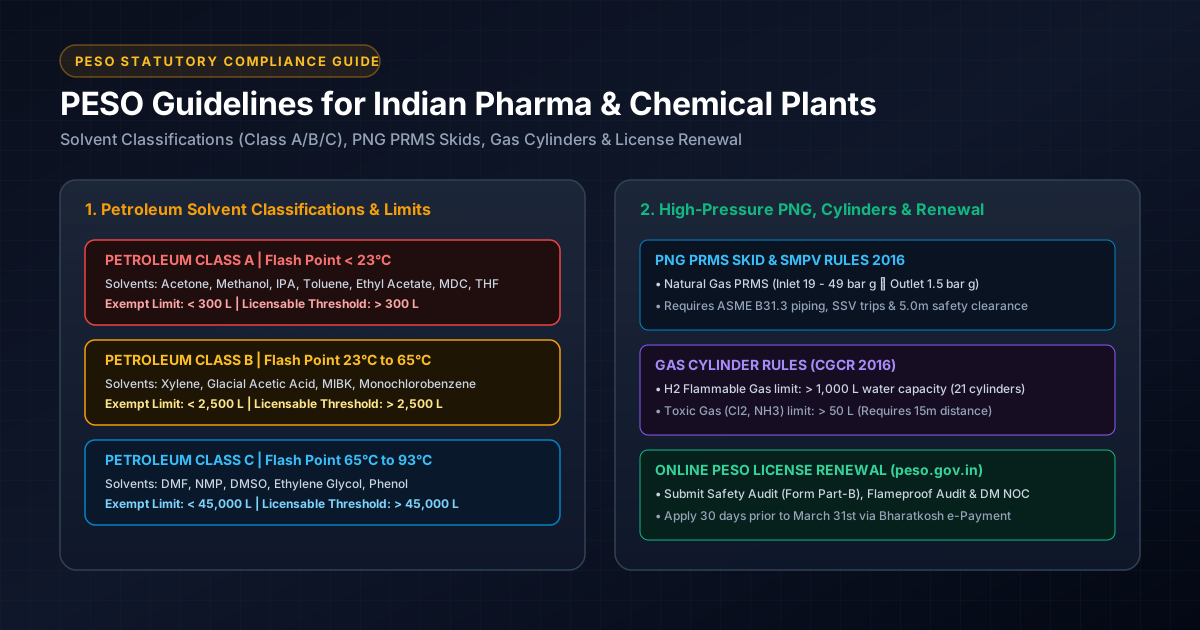
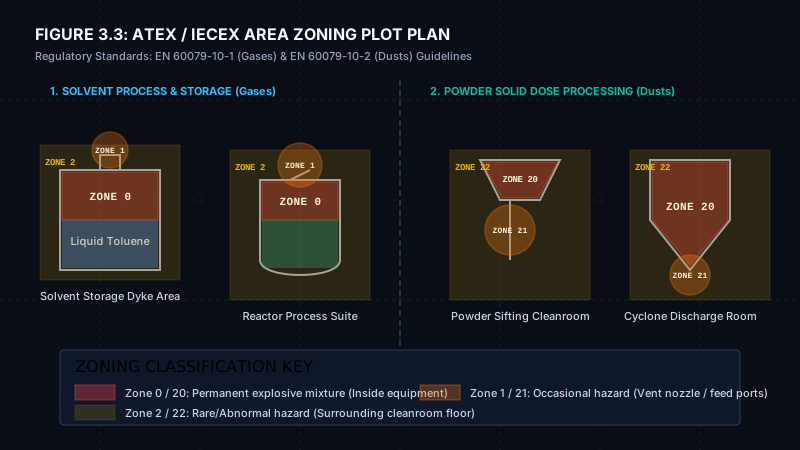
Classify hazardous areas in solvent handling and powder processing plants. Learn the differences between ATEX Zone 0, 1, 2, 20, 21, and 22.

Process SafetyATEXIECExHazardous Area ClassificationSolvent Safety
Kiran Seepana 0 0
20 Essential Chemical Reactions in Pharmaceutical Manufacturing: Mechanisms, Real-World Drug Syntheses & Process Safety
Process Safety
10 min read

20 Essential Chemical Reactions in Pharmaceutical Manufacturing: Mechanisms, Real-World Drug Syntheses & Process Safety

A comprehensive chemical engineering guide to 20 essential chemical reactions in the pharmaceutical industry. Details reaction mechanisms, real-world API synthesis routes (Aspirin, Paracetamol, Sartans, Peptides), process safety hazards, and an embedded high-resolution infographic.

Chemical ReactionsAPI SynthesisAspirinParacetamolSartansPeptidesHydrogenationNitrationProcess Safety
Kiran Seepana 0 0
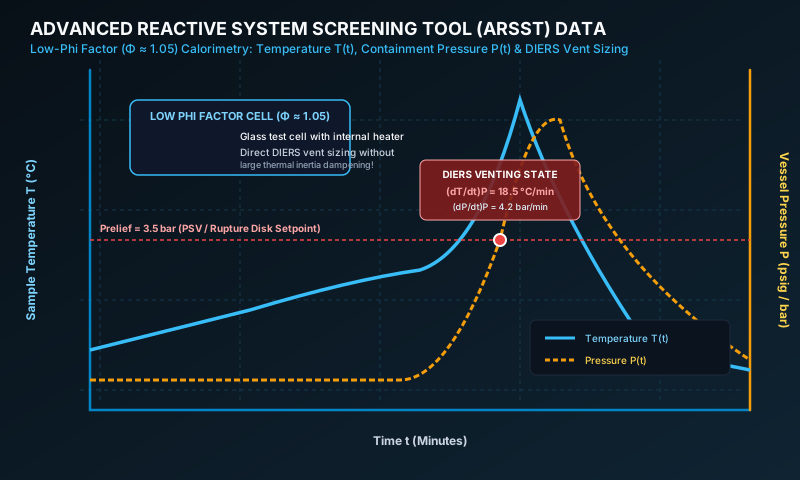
Emergency Relief System Design for Runaway Reactions in Pharma: DIERS Methodology, Two-Phase Flow, and Industrial Case Study
Process Safety
10 min read

Emergency Relief System Design for Runaway Reactions in Pharma: DIERS Methodology, Two-Phase Flow, and Industrial Case Study

An authoritative chemical engineering guide on Emergency Relief System (ERS) design for runaway reactions in pharma batch reactors, covering DIERS two-phase flow, Leung Omega method, reaction calorimetry (RC1e/ARC), Stoessel criticality, and an industrial 5 KL case study.

Process SafetyDIERSRunaway ReactionsEmergency ReliefCalorimetryRC1eARCTwo-Phase FlowPSV SizingRupture DiskAPI Manufacturing
Kiran Seepana 0 0
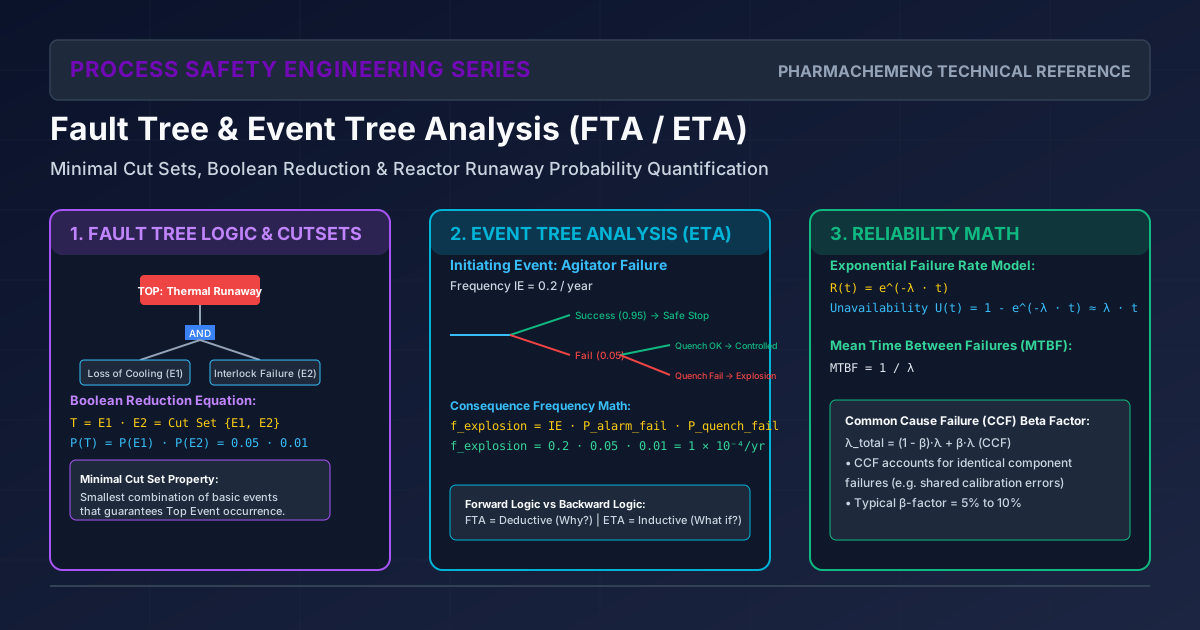
Layer of Protection Analysis (LOPA): From Concept to Worksheet
Process Safety
6 min read

Layer of Protection Analysis (LOPA): From Concept to Worksheet

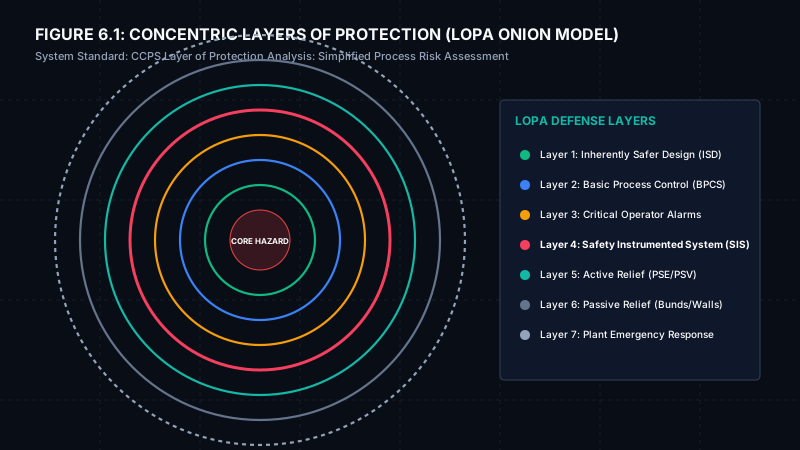
Evaluate process risk using Layer of Protection Analysis (LOPA). Learn to identify initiating events, Independent Protection Layers (IPLs), and calculate risk frequencies.

Process SafetyLOPARisk AssessmentFunctional SafetySIS
Kiran Seepana 0 0
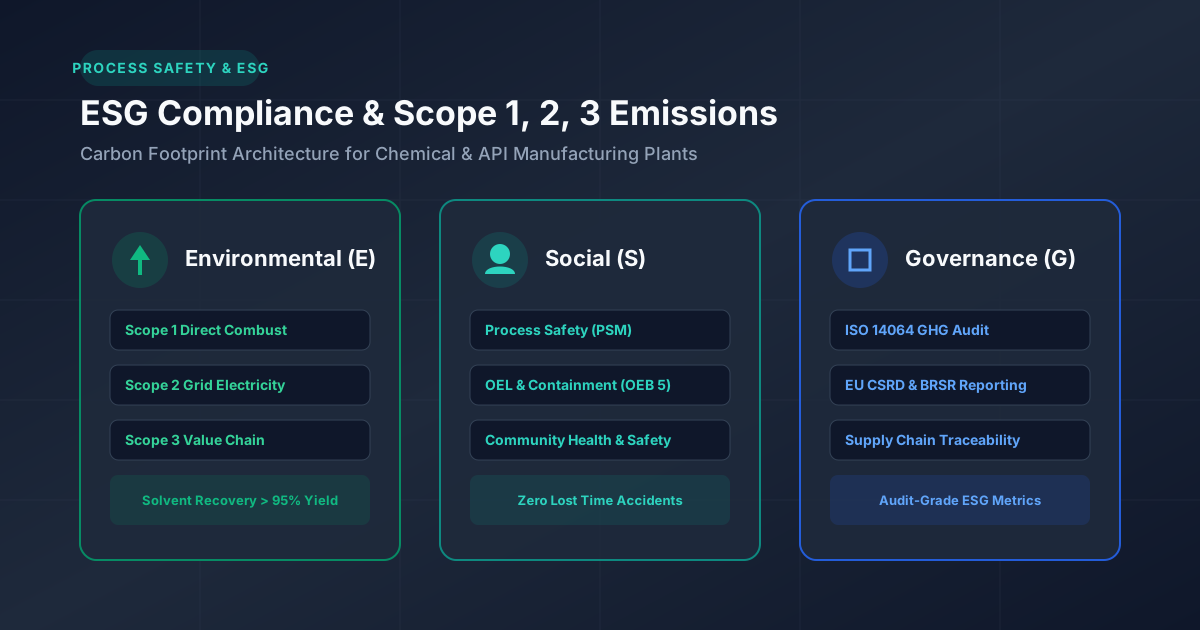
Environmental, Social, and Governance (ESG) in Chemical & API Manufacturing: Scope 1, 2 & 3 Carbon Footprint Guide
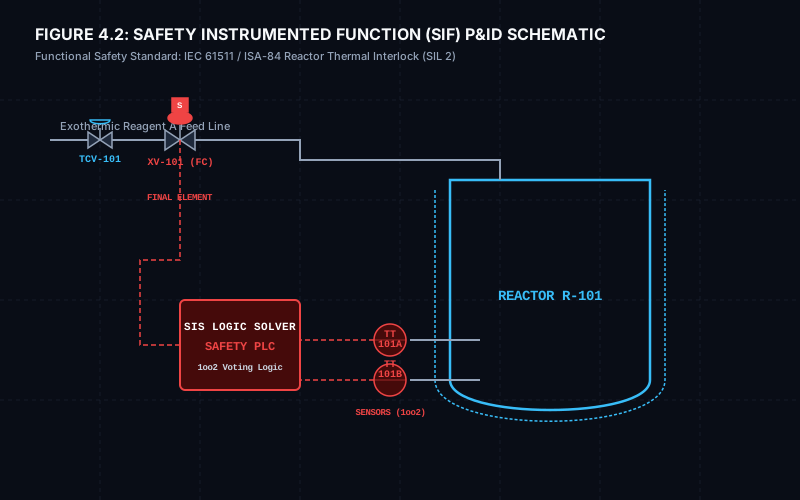
Process Safety
10 min read

Environmental, Social, and Governance (ESG) in Chemical & API Manufacturing: Scope 1, 2 & 3 Carbon Footprint Guide

A comprehensive chemical engineering guide to ESG (Environmental, Social, and Governance) compliance in chemical and API manufacturing. Includes Scope 1, 2, and 3 GHG Protocol emissions calculation methodologies, decarbonization levers, and an interactive downloadable Excel calculator.

ESGScope 1Scope 2Scope 3GHG ProtocolSustainabilityCarbon FootprintDecarbonization
Kiran Seepana 0 0
Designing Safe Exothermic Reactors: Temperature Control Philosophy, Jacket Hydraulics, and Advanced Automation
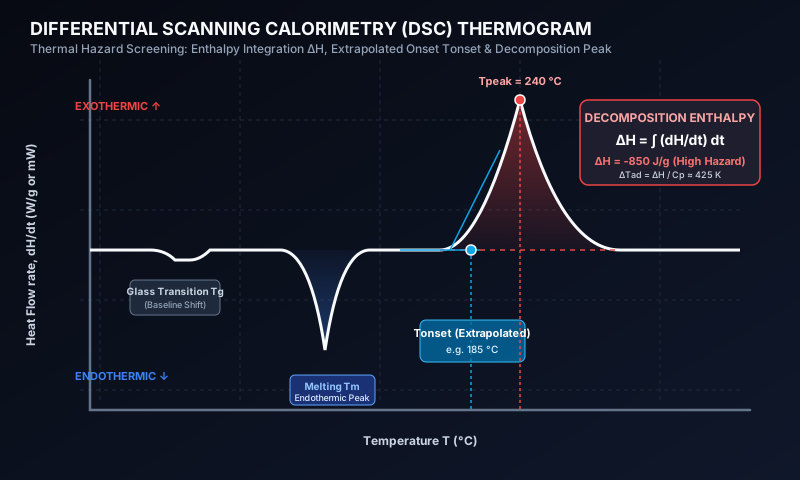
Process Safety
11 min read

Designing Safe Exothermic Reactors: Temperature Control Philosophy, Jacket Hydraulics, and Advanced Automation

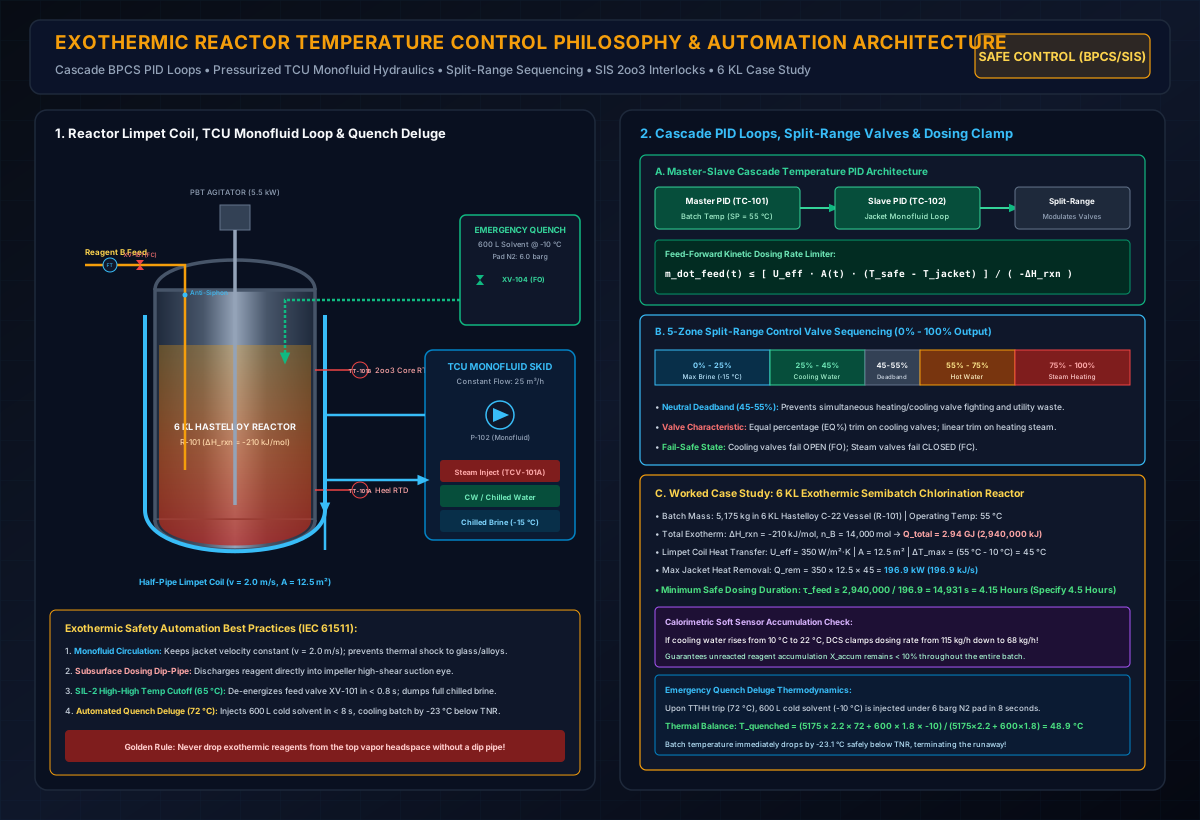
A definitive, calculation-oriented chemical engineering guide on temperature control philosophy for safe exothermic batch and semibatch reactors, covering monofluid TCU hydraulics, master-slave cascade PID control, split-range valve sequencing, calorimetric soft sensors, SIS/SIL-2 interlocks, and a 6 KL industrial case study.

Exothermic ReactorsTemperature ControlCascade ControlProcess SafetyTCU HydraulicsLimpet CoilSIS / SIL-2Split-Range ControlSoft SensorsAPI ManufacturingScale-Up
Kiran Seepana 0 0

Disclaimer

The technical articles, chemical engineering equations, and recommendations published in these blogs are for informational and educational purposes only. They are based on general engineering practices and principles, which may not apply to specific design contexts or plant conditions. Users are responsible for verifying all design criteria and safety margins with certified professional engineers prior to implementation.