# Raw Material Storage & Handling in Pharma & Chemical Plants: cGMP Zoning, RLAF Dispensing, Solvent Safety & Inventory Control
# Executive Summary & cGMP Regulatory Framework
In pharmaceutical Active Pharmaceutical Ingredient (API), formulation, and fine chemical manufacturing, raw material (RM) management is the foundational pillar of product quality, batch reproducibility, and plant safety.
Improper storage, cross-contamination during sampling, mislabeling, or static discharges during powder handling can lead to catastrophic batch failures, regulatory warning letters, or industrial dust explosions.
Global regulatory authorities enforce strict material control mandates under:
- US FDA 21 CFR Part 211 (Subpart E - Control of Components and Drug Product Containers/Closures): Mandating written procedures for receipt, identification, storage, handling, sampling, testing, and approval or rejection of raw materials.
- ICH Q7 (Good Manufacturing Practice for Active Pharmaceutical Ingredients - Section 7): Outlining requirements for material receipt, quarantine, sampling, storage, and retesting.
- EU GMP Annex 8 (Sampling of Starting and Packaging Materials): Guidelines on statistical sampling plans (n, p, or r plans) and identity verification.
- Schedule M (Drugs and Cosmetics Rules, India): Specifying warehouse layout requirements, temperature/humidity controls, and clean dispensing environments.
This technical publication details the 4-stage warehouse layout zoning, Reverse Laminar Air Flow (RLAF) sampling mechanics, liquid/solid transfer safety, combustible dust control, engineering best practices, MKT excursion case studies, and FEFO inventory strategies.
# 1. 4-Stage Warehouse Layout Zoning & Material Flow
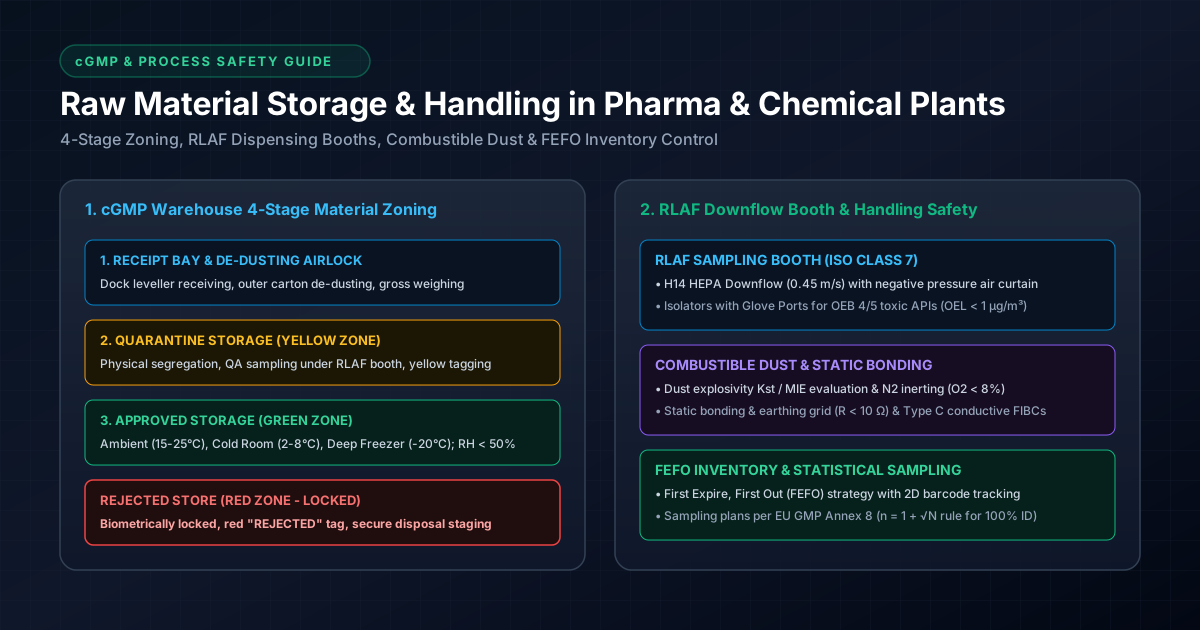
A compliant pharmaceutical raw material warehouse must follow a strict One-Way Material Flow to prevent mix-ups and cross-contamination. Physical zoning separates materials based on their quality status and environmental requirements:
                  4-STAGE cGMP RAW MATERIAL WAREHOUSE LAYOUT
 ┌────────────────────────────────────────────────────────────────────────────────────────┐
 │ STAGE 1: MATERIAL RECEIPT & DE-DUSTING AIRLOCK                                         │
 │ • Dock leveller receipt bay, pallet cleaning, outer carton de-dusting, gross weight   │
 ├────────────────────────────────────────────────────────────────────────────────────────┤
 │ STAGE 2: QUARANTINE STORAGE (YELLOW ZONE)                                              │
 │ • Segregated physical storage; QA sampling under RLAF downflow booth; Yellow labels    │
 ├────────────────────────────────────────────────────────────────────────────────────────┤
 │ STAGE 3: APPROVED MATERIAL STORAGE (GREEN ZONE)                                        │
 │ • Ambient Storage (15°C - 25°C), Cold Room (2°C - 8°C), Deep Freezer (-20°C); RH < 50% │
 ├────────────────────────────────────────────────────────────────────────────────────────┤
 │ STAGE 4: DISPENSING & STAGING AREA                                                     │
 │ • RLAF / Containment Isolator dispensing; Batch pre-weighing; Clean room transfer      │
 ├────────────────────────────────────────────────────────────────────────────────────────┤
 │ SEGREGATED AREA: REJECTED MATERIAL STORE (RED ZONE)                                    │
 │ • Biometrically locked physical room; Red labels; Secure disposal staging            │
 └────────────────────────────────────────────────────────────────────────────────────────┘
# 1.1 Detailed Zoning Requirements:
| Warehouse Zone | Quality Status | HVAC & Environmental Class | Operating Temperature / Relative Humidity | Access Control & Sizing Criteria |
|---|---|---|---|---|
| Receipt Bay & De-Dusting | Unchecked | Unclassified (Filtered Air) | Ambient (Below 30°C) | Interlocked roll-up doors, de-dusting vacuum system |
| Quarantine Storage | Under Test | ISO Class 8 (Grade D optional) | 15°C to 25°C, RH < 60% | Physical barrier, yellow "QUARANTINE" status tags |
| Approved Storage (Ambient) | Approved | ISO Class 8 / Controlled | 15°C to 25°C, RH < 50% | Pallet racking (100 mm off floor, 300 mm off walls) |
| Cold Storage Room | Approved | Controlled Air Circulation | 2°C to 8°C, RH < 45% | Redundant chiller units, calibrated continuous 24/7 logging |
| Sampling & Dispensing Booth | In-Process | ISO Class 7 (Grade C) | 20°C ± 2°C, RH < 45% | RLAF downflow booth, negative pressure air curtain |
| Rejected Material Store | Rejected | Controlled Access | Ambient | Biometrically locked room, red "REJECTED" tag |
# 2. Sampling & Dispensing Booth Design (RLAF & Downflow Mechanics)
Sampling raw materials poses the highest risk of exposing bulk powders to environmental contaminants and exposing operators to potent drug substances.
              REVERSE LAMINAR AIR FLOW (RLAF) DOWNFLOW BOOTH
 ┌────────────────────────────────────────────────────────────────────────┐
 │                      HEPA FILTER BANK (99.97% @ 0.3 μm)                 │
 │                           ▼   ▼   ▼   ▼   ▼                            │
 │                        UNIFORM LAMINAR DOWNFLOW                        │
 │                           │   │   │   │   │                            │
 │   ┌───────────────────────┼───┼───┼───┼────────────────────────┐   │
 │   │                       │   │   │   │                        │   │
 │   │      OPERATOR         ▼   ▼   ▼   ▼      RAW MATERIAL      │   │
 │   │       BREATHING      [OPEN DRUM /        SAMPLING /        │   │
 │   │         ZONE         POWDER TARE]        WEIGHING SCALE    │   │
 │   │                       │   │   │   │                        │   │
 │   └───────────────────────┼───┼───┼───┼────────────────────────┘   │
 │                           ▼   ▼   ▼   ▼                            │
 │                      BOTTOM SUCTION GRILLE (PRE-FILTERS)               │
 └────────────────────────────────────────────────────────────────────────┘
# 2.1 Technical Specifications of RLAF Downflow Booths:
- Airflow Pattern: Recirculating unidirectional vertical downflow (0.45 m/s ± 20% velocity) protecting both operator and material.
- Filtration Hierarchy:
- Primary Filter: G4 Pre-filter (90% arrestance down to 10 μm).
- Secondary Filter: F9 Fine filter (95% efficiency down to 1 μm).
- Final Terminal Filter: H14 HEPA Filter (99.995% efficiency at 0.3 μm MPPS).
- Pressure Differential & Containment: Negative pressure air curtain at the front aperture prevents airborne dust from escaping into the surrounding warehouse.
- Potent Material Handling (OEB 4 / OEB 5): For highly potent APIs (Occupational Exposure Band 4/5, Occupational Exposure Limit under 1 μg/m³), rigid wall Isolators with Glove Ports and split butterfly valves (SBV) are mandatory instead of open RLAF booths.
# 3. Solid & Liquid Raw Material Handling Safety
Handling raw materials in chemical and API manufacturing involves both solid bulk powders and highly volatile flammable or corrosive liquids.
# 3.1 Solid Powder Handling & Combustible Dust Safety
Powder transferring, sifting, and charging into reactors create explosive dust cloud hazards:
- Combustible Dust Metrics (NFPA 654 / NFPA 68):
- Kst Value & Pmax: Dust explosivity index (Kst) determines explosion venting relief area on dust collectors.
- Minimum Ignition Energy (MIE): Powders with Minimum Ignition Energy under 10 mJ require mandatory Nitrogen Inertization (O2 under 8%) during drum discharge and sifting.
- Static Bonding & Earthing (IS 7689 / NFPA 77):
- All stainless steel hoppers, drums, and scoops must be bonded to a certified earth pit (resistance under 10 Ohms).
- Flexible transfer hoses must embed continuous helical stainless steel grounding wire.
- Intermediate Bulk Containers (IBCs) and FIBC big bags must be Type C (Groundable Conductive) or Type D (Dispersive).
# 3.2 Liquid Raw Materials & Flammable Solvent Handling
Bulk solvent receiving and drum dispensing require strict engineering controls under the Petroleum Rules, 2002:
                    CLOSED-LOOP DRUM SOLVENT DISPENSING
 ┌────────────────────────────────────────────────────────────────────────┐
 │  FLAMMABLE SOLVENT DRUM (CLASS A / B)                                  │
 │                                                                        │
 │  ┌──────────────────────────────────────────────────────────────────┐  │
 │  │ [Dry-Break Quick Coupling] ──► [Flameproof Drum Pump (Ex-d)]    │  │
 │  │                                        │                         │  │
 │  │ [Earthing Clamp: R < 10 Ω] ────────────┼──► [To Dyke / Reactor]  │  │
 │  │                                        ▼                         │  │
 │  │ [N2 Blanketing Inlet: 0.1 bar]    [Flame Arrestor Vent]          │  │
 │  └──────────────────────────────────────────────────────────────────┘  │
 └────────────────────────────────────────────────────────────────────────┘
# Key Liquid Safety Guidelines:
- Closed-Loop Transfer Pumps: Pumping solvent from 200 L drums into day tanks or reactors must use Flameproof (Ex-d) Magnetic Drive Centrifugal Pumps or Air-Operated Double Diaphragm (AODD) Pumps with PTFE conductive diaphragms.
- Flame Arrestors & Pressure Relief Valves: All solvent storage drum vents and bulk tanks must feature UL/FM-approved Inline Deflagration Flame Arrestors and Breather Valves (PVRV).
- Secondary Spill Containment Dykes: Solvent drum storage areas must feature epoxy-coated containment dykes sized to hold at least 110% of the largest single container or 25% of total aggregate storage.
# 4. Quality Control, Traceability & Sampling Protocols
# 4.1 Statistical Sampling Plans (EU GMP Annex 8 / ISO 2859-1)
To verify raw material identity and purity, QA sampling inspectors execute statistical sampling plans based on risk assessment:
- The n-Plan (n = 1 + √N):
- Used when material is uniform, received from a validated, audited manufacturer, and intended for non-critical steps.
- Example: For N = 100 drums received, sample n = 1 + √100 = 11 drums.
- The p-Plan (p = 0.2 √N):
- Used for identity testing of materials from qualified suppliers where sampling is performed on all containers for identity verification.
- Example: For N = 100 containers, p = 0.2 √100 = 2 composite samples.
- The r-Plan (r = 1.5 √N):
- Used for raw materials from unvalidated suppliers or herbal/complex natural extracts requiring stringent testing.
# 4.2 FEFO / FIFO Inventory Management & Barcode Tracking
To prevent material degradation and inadvertent use of expired stock:
- First Expire, First Out (FEFO): Mandatory strategy where batches with the earliest retest/expiry date are picked first, irrespective of receipt date.
- 2D DataMatrix Barcoding: Every container receives a unique barcode at the receipt bay encoding Material Code, Master Batch Number, Lot Number, Status Tag, Net Weight, and Retest Date.
- WMS Interlocking: Computerized Warehouse Management Systems (WMS) physically lock ERP dispensing authorization if a material's retest date has elapsed.
# 5. Engineering Best Practices, MKT Illustration & Operational SOPs
To maintain high cGMP compliance and operational safety in raw material warehouses, chemical and pharma plants implement the following engineering best practices:
# 5.1 Pallet Hygiene & Material Transfer SOP
- Wooden Pallet Restriction: Wooden pallets are strictly forbidden inside cGMP sampling, dispensing, and storage rooms because wood absorbs moisture, harbors fungal spores (Aspergillus species), and emits haloanisoles (2,4,6-tribromoanisole / TBA causing musty product odors).
- HDPE / Aluminium Pallet Standard: Materials offloaded from wooden shipping pallets in the unclassified receipt bay must be transferred onto cleanable High-Density Polyethylene (HDPE) or anodized aluminium pallets before entering quarantine.
# 5.2 Cleanroom Air Pressure Cascades
- Maintain a positive differential air pressure cascade (+15 Pa in clean dispensing staging ➔ +10 Pa in clean corridors ➔ 0 Pa in unclassified areas) to prevent environmental dust ingress.
- RLAF downflow booths operate with a localized negative pressure air curtain relative to the sampling room to capture powder airborne aerosols inside the booth's lower suction grilles.
# 5.3 Static Grounding Interlocks for Solvent Drums
- Install Interlocked Earth Monitoring Devices (e.g., Earth-Rite / Bond-Rite systems) on flammable solvent transfer stations.
- The system continuously measures ground loop resistance; if resistance exceeds 10 Ohms, the interlock trips the electrical supply to the solvent transfer pump, preventing static spark discharge.
# 5.4 Mean Kinetic Temperature (MKT) Excursion Rules & Worked Illustration
When temperature-sensitive materials (2°C to 8°C cold storage) undergo temporary thermal excursions during receiving, power changeovers, or chiller maintenance, QA calculates the Mean Kinetic Temperature (MKT) to evaluate chemical stability impact:
Where:
- (Standard activation energy for pharmaceutical product degradation).
- (Universal gas constant).
- = Temperature of the k-th monitoring interval in Kelvin (K = °C + 273.15).
# Worked Numerical Case Study / Illustration:
An API raw material requiring 2°C to 8°C storage was monitored continuously for 7 Days (168 Hours) during a summer power disruption. The temperature log showed:
| Storage Interval | Duration (ti) | Time Fraction (fi = ti / 168) | Recorded Temperature (Ti) | Kelvin Temperature (Ti + 273.15) | Arrhenius Factor e^(-10000 / Ti) |
|---|---|---|---|---|---|
| Normal Operation | 120 Hours (5 Days) | 120 / 168 = 0.7143 | 5.0°C | 278.15 K | 2.434 × 10⁻¹⁶ |
| Power Excursion | 24 Hours (1 Day) | 24 / 168 = 0.1429 | 15.0°C | 288.15 K | 8.476 × 10⁻¹⁶ |
| Cool-Down Recovery | 24 Hours (1 Day) | 24 / 168 = 0.1429 | 10.0°C | 283.15 K | 4.593 × 10⁻¹⁶ |
Step 1: Calculate Activation Constant (ΔH / R):
Step 2: Weighted Sum of Exponential Values:
Step 3: Calculate Final MKT Value:
QA Quality Disposition:
- Simple Arithmetic Mean: (5 × 5 + 15 × 1 + 10 × 1) / 7 = 7.14°C (Falsely suggests full compliance!).
- True Kinetic MKT: 8.08°C (Exceeds the 8.0°C statutory cold storage upper limit due to exponential thermal degradation kinetics at 15°C).
- Corrective Action: QA raises a Quality Deviation, places the container batch on physical hold, and performs HPLC purity & stability retesting before release.
# 5.5 Dust Explosivity (Kst) Classification Table
| Dust Explosivity Class | Deflagration Index Kst (bar · m/s) | Explosivity Level | Typical Industrial Chemical Examples | Mandated Safety Controls |
|---|---|---|---|---|
| St 0 | Kst = 0 | Non-Explosive | Sodium Chloride, Calcium Carbonate, Silica | Standard dust extraction |
| St 1 | 0 < Kst <= 200 | Weak / Moderate Explosive | Starch, Lactose, Aspirin, Sucrose, Paracetamol | Dust collector explosion vent panel |
| St 2 | 200 < Kst <= 300 | Strong Explosive | Cellulose powder, Epoxy resin, Organic Dyes | ATEX rated, N2 inerting (O2 under 8%) |
| St 3 | Kst > 300 | Very Strong Explosive | Aluminium powder, Magnesium, Pigments | Fast-acting explosion isolation valve + N2 |
# 6. Official Regulatory & Engineering Reference Standards
| Standard / Regulatory Code | Issuing Body | Technical Scope & cGMP Application |
|---|---|---|
| US FDA 21 CFR Part 211 | US Food & Drug Administration | Subpart E (Components & Closures): Federal requirements for receipt, storage, sampling, testing, and approval of raw materials. |
| ICH Q7 Section 7 | International Council for Harmonisation | Materials Management: Global GMP standards for API raw material receipt, quarantine, sampling, storage, and retesting. |
| EU GMP Annex 8 | European Medicines Agency (EMA) | Sampling of Starting Materials: Guidelines on statistical sampling plans (n, p, r plans) and container identity verification. |
| Schedule M | CDSCO / Ministry of Health, India | Good Manufacturing Practices: Indian statutory rules for pharmaceutical warehouse design, sampling booths, and environmental controls. |
| ISO 14644-1:2015 | International Organization for Standardization | Cleanrooms & Associated Environments: Classification of air cleanliness by particle concentration (Class 7 dispensing booths). |
| NFPA 654 | National Fire Protection Association | Combustible Dust Explosions: Standard for the prevention of fire and dust explosions from manufacturing particulate solids. |
| NFPA 77 / IS 7689 | NFPA / Bureau of Indian Standards | Static Electricity Safety: Recommended practice on static electricity, bonding, earthing grid resistance (under 10 Ohms). |
| NFPA 30 | National Fire Protection Association | Flammable Liquids Code: Requirements for solvent drum storage, dyke capacity, emergency relief venting, and spill control. |