# PESO Guidelines for Indian Chemical & Pharma Industry: Solvent Classification, License Thresholds, State Excise (Ethanol/SDS), PNG Skids & Renewal Procedure
# Executive Summary & Statutory Framework
In the Indian Chemical, Active Pharmaceutical Ingredient (API), and Bulk Drug manufacturing sectors, compliance with the Petroleum and Explosives Safety Organization (PESO)—formerly known as the Department of Explosives under the Department for Promotion of Industry and Internal Trade (DPIIT), Ministry of Commerce & Industry, Government of India—is a critical statutory mandate.
Furthermore, several key industrial solvents (such as Ethanol / Ethyl Alcohol, Special Denatured Spirit - SDS, and Methanol) operate under a Dual Regulatory Framework, requiring both PESO safety approvals AND State Excise Department Licenses under the respective State Prohibition & Excise Acts.
PESO enforces statutory safety rules under:
- The Petroleum Act, 1934 & Petroleum Rules, 2002 (Regulating flammable solvent tank farms, bulk storage, and transport).
- State Prohibition & Excise Acts (Regulating Ethanol, Rectified Spirit, SDS, ENA, and industrial alcohol passes).
- The Explosives Act, 1884 & Static and Mobile Pressure Vessels (Unfired) Rules, 2016 (SMPV Rules) (Regulating high-pressure gas storage, PNG/CNG skids, bulk N2 / O2 / H2 cryogenic vessels).
- The Gas Cylinders Rules, 2016 (Regulating loose gas cylinders, cylinder manifold banks, and toxic/flammable compressed gas storage).
Operating a chemical or pharma unit without valid PESO and Excise licenses attracts severe legal prosecution under Section 23 of the Petroleum Act and State Excise Acts, including facility sealing, heavy fines, and non-bailable imprisonment.
This comprehensive regulatory masterclass covers:
- Petroleum Solvent Classifications (Class A, Class B, Class C) and exempt vs. licensable threshold storage limits.
- Master List of PESO Solvents used in Indian API & fine chemical synthesis.
- State Excise Licensing for Ethanol, SDS, ENA & Methanol Poison Permits.
- Piped Natural Gas (PNG) PRMS Skids & Loose Gas Cylinders (CGCR) Storage Criteria.
- Step-by-Step Procedure for New License Approval & Online License Renewal on the PESO Portal.
- Official Statutory Acts, Rules & Reference Standards.
# 1. PESO Solvent Classifications & Threshold Storage Quantities
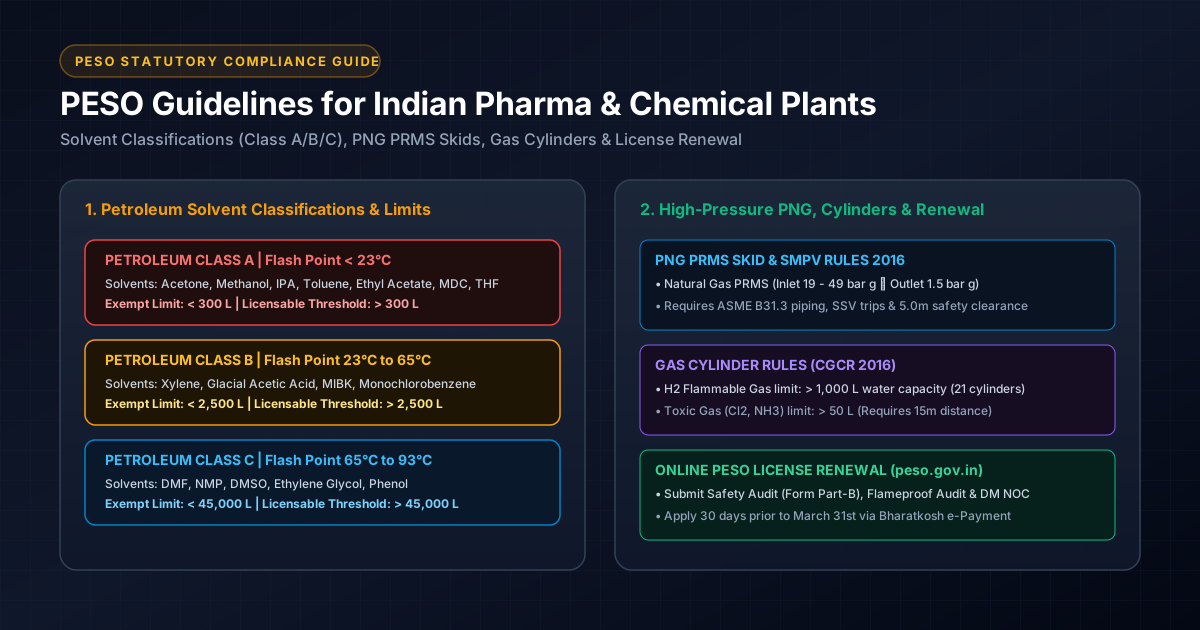
Under Rule 2 of the Petroleum Rules, 2002, liquid petroleum products and organic solvents are categorized into three distinct classes based on their Flash Point (the lowest temperature at which liquid emits sufficient vapor to form an ignitible mixture with air):
                       PESO PETROLEUM SOLVENT CLASSIFICATIONS
 ┌────────────────────────────────────────────────────────────────────────────────────────┐
 │ CLASS A PETROLEUM  │ Flash Point < 23°C (73°F)                                         │
 │                    │ Extremely Flammable (Ethanol, Acetone, Toluene, IPA, Methanol, MDC) │
 ├────────────────────┼───────────────────────────────────────────────────────────────────┤
 │ CLASS B PETROLEUM  │ Flash Point 23°C to 65°C (73°F to 150°F)                         │
 │                    │ Flammable (Xylene, Glacial Acetic Acid, MIBK, Monochlorobenzene)  │
 ├────────────────────┼───────────────────────────────────────────────────────────────────┤
 │ CLASS C PETROLEUM  │ Flash Point 65°C to 93°C (150°F to 200°F)                        │
 │                    │ Combustible (DMF, NMP, DMSO, Ethylene Glycol, Phenol)            │
 └────────────────────┴───────────────────────────────────────────────────────────────────┘
# 1.1 Statutory Storage License Thresholds (Exempt vs. Licensable)
Per Rules 116, 117, and 118 of the Petroleum Rules, 2002, no license is required for storing small exempted quantities, provided strict safety conditions are met:
| Petroleum Class | Flash Point Range | Exempt Limit (No PESO License Required) | Licensable Storage Threshold | Form of License |
|---|---|---|---|---|
| Petroleum Class A | Below 23°C | Up to 300 Litres in non-bulk receptacles (< 30 \text{ L} containers) | > 300 Litres aggregate storage | Form XV / Form IX |
| Petroleum Class B | 23°C to 65°C | Up to 2,500 Litres in non-bulk containers | > 2,500 Litres aggregate storage | Form XV / Form IX |
| Petroleum Class C | 65°C to 93°C | Up to 45,000 Litres in bulk tanks | > 45,000 Litres aggregate storage | Form XV / Form IX |
| Heavy / Non-Petroleum | Above 93°C | Unrestricted (Regulated under Factories Act / State Fire Dept) | N/A | Local Factory License |
Critical Safety Note: If Class A and Class B solvents are stored together in the same premises, the aggregate combined quantity determines licensability. If the total equivalent Class A volume exceeds 300 Litres, a PESO Form IX / Form XV storage license is mandatory.
# 2. Comprehensive Master List of PESO Solvents in Pharma & Chemical Plants
The following master table categorizes major industrial solvents widely used in Indian API synthesis, crystallization, extractions, and organic reactions according to their official PESO Petroleum Class and Excise Status:
| Solvent Name | CAS Number | Flash Point (°C) | Boiling Point (°C) | PESO Petroleum Class | State Excise / Poison License Status | Typical Pharma API Application |
|---|---|---|---|---|---|---|
| Ethanol (Special Denatured Spirit) | 64-17-5 | 13°C | 78.37°C | Class A | State Excise License (Form DS-1 / DS-2) | Reaction solvent, extraction, crystallization |
| Ethanol (Undenatured / RS / ENA) | 64-17-5 | 13°C | 78.37°C | Class A | Strict State Excise (Form RS-II / Pass) | High-purity API synthesis, granulations |
| Acetone | 67-64-1 | -20°C | 56°C | Class A | PESO Class A Only | Reactor cleaning, crystallization, washing |
| Methanol | 67-56-1 | 11°C | 64.7°C | Class A | State Poison License (Poisons Act) | Solvolysis, nucleophilic reactions, extraction |
| Isopropanol (IPA) | 67-63-0 | 12°C | 82.6°C | Class A | PESO Class A (State Permit in some States) | API isolation, recrystallization, SAN sanitization |
| Ethyl Acetate | 141-78-6 | -4°C | 77.1°C | Class A | PESO Class A Only | Liquid-liquid extraction, workup washing |
| Toluene | 108-88-3 | 4°C | 110.6°C | Class A | PESO Class A Only | Non-polar reaction solvent, azeotropic drying |
| Tetrahydrofuran (THF) | 109-99-9 | -14.5°C | 66°C | Class A | PESO Class A Only | Grignard reactions, reduction reactions |
| Acetonitrile (ACN) | 75-05-8 | 2°C | 82°C | Class A | PESO Class A Only | HPLC mobile phase, peptide synthesis |
| Dichloromethane (MDC/DCM) | 75-09-2 | None (Vapor) | 39.6°C | Class A (Special) | PESO Class A Only | Extraction, chlorinated reaction solvent |
| n-Hexane | 110-54-3 | -22°C | 69°C | Class A | PESO Class A Only | Non-polar wash, oil extraction |
| Cyclohexane | 110-82-7 | -20°C | 80.7°C | Class A | PESO Class A Only | Reagent solvent, crystallization |
| Methyl Isobutyl Ketone (MIBK) | 108-10-1 | 14°C | 116.5°C | Class A | PESO Class A Only | High-boiling extraction solvent |
| Xylene (Mixed Isomers) | 1330-20-7 | 27°C | 138.5°C | Class B | PESO Class B Only | High-temperature condensation reactions |
| Glacial Acetic Acid | 64-19-7 | 39°C | 118°C | Class B | PESO Class B Only | Acidic reaction medium, acetylation |
| Monochlorobenzene (MCB) | 108-90-7 | 28°C | 131°C | Class B | PESO Class B Only | Aromatic substitution solvent |
| Cyclohexanone | 108-94-1 | 44°C | 155.6°C | Class B | PESO Class B Only | Specialty synthesis solvent |
| Dimethylformamide (DMF) | 68-12-2 | 58°C | 153°C | Class B / Class C | PESO Class B/C Only | Polar aprotic coupling reactions |
| N-Methyl-2-Pyrrolidone (NMP) | 872-50-4 | 91°C | 202°C | Class C | PESO Class C Only | High-temp polymer/polypeptide solvent |
| Dimethyl Sulfoxide (DMSO) | 67-68-5 | 87°C | 189°C | Class C | PESO Class C Only | Nucleophilic substitution, oxidation |
| Ethylene Glycol | 107-21-1 | 111°C | 197.3°C | Non-Petroleum | Factory License Only | TCU chiller brine solvent |
# 3. State Excise Licensing & Regulated Solvents (Ethanol, SDS, Methanol)
In Indian chemical and pharmaceutical manufacturing, storing and consuming alcohol-based solvents requires Dual Statutory Approval: PESO Class A Approval (for flammable safety) AND State Prohibition & Excise Licensing (for revenue control & anti-diversion).
                    DUAL STATUTORY SOLVENT REGULATORY FRAMEWORK
 ┌────────────────────────────────────────────────────────────────────────────────────────┐
 │ PESO APPROVAL (PETROLEUM RULES 2002)     │ STATE EXCISE APPROVAL (EXCISE ACT)          │
 │ • Focus: Flammability, Tank Farm Dyke,   │ • Focus: Anti-Diversion, Revenue Protection,│
 │   Safety Distances, Ex-d Electricals    │   Pass Systems, Monthly Alcohol Balance     │
 └──────────────────────────────────────────┴──────────────────────────────────────────┘
# 3.1 Ethanol & Special Denatured Spirit (SDS) Licensing
- Special Denatured Spirit (SDS): Industrial Ethanol denatured with Crotonaldehyde, Methanol, or Denatonium Benzoate to render it non-potable. Requires Form DS-1 / Form DS-2 License from the State Excise Commissioner.
- Rectified Spirit (RS / 95% v/v) & Absolute Alcohol (99.5% v/v): Undenatured pure alcohol used in API synthesis requires a Form RS-II / Form DL-1 License. Storage tanks must be fitted with State Excise Double Lock-and-Key Valves and inspected by an assigned State Excise Officer.
- Inter-State Import & Transport Pass System: Every tanker shipment of Ethanol requires:
- Import Permit (IP): Issued by the Destination State Excise Commissioner.
- Export Permit (EP): Issued by the Origin Distillery State Excise Department.
- Transport Pass (TP): Escorts the bulk tanker; verified at state border checkposts.
- Allowable Transit & Evaporation Wastage Limits:
- Maximum allowable transit wastage: < 0.5\% of tanker dip volume.
- Maximum allowable monthly tank storage evaporation loss: < 0.2\%. Any unaccounted alcohol loss beyond limits attracts heavy Excise Duty penalties.
- Monthly Stock Returns (Form RS-6 / Form DS-6): Industrial units must submit monthly returns detailing:
# 3.2 Methanol Poison License (Poisons Act, 1919)
Because Methanol is highly toxic ( causes permanent optic nerve blindness; is fatal), several chemical-manufacturing states (e.g., Gujarat, Maharashtra, Telangana, Andhra Pradesh, Tamil Nadu) enforce the State Poison Rules:
- Storing Methanol in bulk requires a Form A / Form B Poison License issued by the District Magistrate / Collector.
- Methanol storage tanks must feature mandatory caution signage ("POISON - METHYL ALCOHOL - FATAL IF SWALLOWED").
# 4. Piped Natural Gas (PNG) Skids & Loose Gas Cylinder Criteria
In addition to solvent tank farms, Indian pharma and chemical manufacturing plants operate high-pressure gas infrastructures governed by SMPV Rules, 2016 and Gas Cylinders Rules, 2016.
                  HIGH-PRESSURE GAS INFRASTRUCTURE ZONING
 ┌───────────────────────────────────────┐         ┌───────────────────────────────────────┐
 │ PNG PRESSURE REDUCTION SKID (PRMS)   │         │ GAS CYLINDER MANIFOLD BANK           │
 │ (Governed by SMPV Rules 2016)         │         │ (Governed by Gas Cylinders Rules 2016)│
 │                                       │         │                                       │
 │ [PNG Inlet Header: 19 - 49 bar g]     │         │ [Hydrogen / Nitrogen / Oxygen Banks]  │
 │   │                                   │         │   │                                   │
 │   ▼                                   │         │   ▼                                   │
 │ [Slam Shut Valve (SSV)]               │         │ [Automatic Changeover Manifold]      │
 │   │                                   │         │   │                                   │
 │   ▼                                   │         │   ▼                                   │
 │ [Dual Pressure Regulators (1.5 bar)]  │         │ [Flashback Arrestor / Flame Arrestor] │
 │   │                                   │         │   │                                   │
 │   ▼                                   │         │   ▼                                   │
 │ [Boiler / Thermic Fluid Heater]       │         │ [To Reactor Block / Autoclave]        │
 └───────────────────────────────────────┘         └───────────────────────────────────────┘
# 4.1 Piped Natural Gas (PNG) / CNG Pressure Reduction Station (PRMS) Skids
Many chemical units consume Piped Natural Gas (PNG) for steam boilers, thermic fluid heaters, and spray dryers.
- Inlet Pressure & Skid Design: PNG enters the site at pressure and passes through a dual-stream Pressure Reduction and Metering Station (PRMS) Skid that steps pressure down to .
- PESO Approval Requirement:
- If gas volume in piping/receivers exceeds statutory limits, prior PESO approval of the PRMS Skid layout, piping design per ASME B31.3, Slam Shut Valve (SSV) trip logic, and Safety Relief Valve (SRV) discharge per IS 7396 is required.
- Mandatory safety distance: Minimum clearance between PRMS skid boundary and any building wall or source of ignition.
# 4.2 Gas Cylinder Storage Rules (Loose Cylinders vs. Manifold Banks)
The Gas Cylinders Rules, 2016 mandate strict licensing criteria based on the gas hazard classification and total water capacity of cylinders stored on site:
| Gas Hazard Category | Gas Examples | Exempt Storage Limit (No PESO License) | Licensable Storage Threshold | Mandatory PESO Safety Distance |
|---|---|---|---|---|
| Toxic Gases | Chlorine (), Ammonia (), Sulfur Dioxide () | Up to 50 Litres total water capacity | > 50 Litres (Approx. > 1 commercial cylinder) | 15.0 Meters + Scrubber System |
| Flammable Gases | Hydrogen (), Acetylene (), LPG, Methane | Up to 1,000 Litres water capacity | > 1,000 Litres (Approx. > 21 cylinders of ) | 6.0 to 9.0 Meters |
| Non-Flammable / Non-Toxic | Nitrogen (), Oxygen (), Argon, Carbon Dioxide | Up to 1,000 Litres water capacity | > 1,000 Litres (Approx. > 21 cylinders of ) | 3.0 Meters |
# Key Cylinder Storage Engineering Practices:
- Vertical Storage with Chains: Loose cylinders must be stored upright, secured individually with anti-drop safety chains or clamping racks.
- Manifold Bank Separation: Oxygen () and Hydrogen () manifold banks must be separated by a minimum physical distance of or an RCC explosion barrier wall ( thick RCC, height).
- Flashback Arrestors: All acetylene and hydrogen manifolds must install UL-listed Dry-Type Flashback Arrestors at cylinder pigtails and main header outlets.
# 5. Step-by-Step PESO Storage License Application Procedure
To obtain a new PESO License (Form IX for Petroleum Tank Farms; Form C / Form D under Gas Cylinder Rules; Form LS-1 under SMPV Rules), follow this official statutory workflow:
                    PESO STORAGE LICENSE APPLICATION WORKFLOW
 ┌────────────────────────────────────────────────────────────────────────────────────────┐
 │ STEP 1: SITE PLAN & ENGINEERING DRAWING APPROVAL                                       │
 │ • Submit Site Master Layout, P&ID, and Safety Distance Plan via online PESO Portal     │
 ├────────────────────────────────────────────────────────────────────────────────────────┤
 │ STEP 2: OBTAIN NOC FROM DISTRICT MAGISTRATE (DM / COLLECTOR)                           │
 │ • DM issues No Objection Certificate (NOC) following Local Police & Fire Inspection    │
 ├────────────────────────────────────────────────────────────────────────────────────────┤
 │ STEP 3: PHYSICAL CONSTRUCTION & SAFETY AUDIT BY COMPETENT PERSON                       │
 │ • Erect tanks, dyke walls, flameproof electricals; Get Safety Certificate (Rule 126/130)│
 ├────────────────────────────────────────────────────────────────────────────────────────┤
 │ STEP 4: SUBMIT FINAL APPLICATION FOR GRANT OF LICENSE                                  │
 │ • Upload DM NOC, Competent Person Certificate, Test Reports & Pay Statutory Fee        │
 ├────────────────────────────────────────────────────────────────────────────────────────┤
 │ STEP 5: PESO JOINT CHIEF CONTROLLER INSPECTION & LICENSE GRANT                         │
 │ • Physical inspection by PESO Officer; Formal PESO Storage License Issued              │
 └────────────────────────────────────────────────────────────────────────────────────────┘
# 5.1 Documents Required for New PESO Storage License:
- Form IX Application filled online via the paperless PESO Portal (https://peso.gov.in).
- Approved Engineering Drawings: Site layout plan drawn to scale ( or ) showing safety distances per Petroleum Rules 105 & 106.
- District Magistrate (DM) NOC: Original No Objection Certificate under Rule 144 issued by the District Collector.
- Competent Person Safety Certificates:
- Form Part-A / Part-B Certificate issued by a PESO-recognized Competent Person (under Rule 126 / 130).
- Hydrostatic pressure test certificate for underground/aboveground tanks.
- Flameproof / Explosion-Proof Electrical Equipment Certificate (ATEX / PESO CCOE Ex-d Certificate) for all motors, positioners, and lighting inside dyke walls.
- Dyke Wall Capacity Verification: Proof that tank dyke containment volume is of the largest tank capacity (or aggregate).
# 6. PESO Storage License Renewal Procedure (Step-by-Step)
PESO storage licenses are granted for a maximum validity period of 3 to 5 financial years (expiring on March 31st of the renewal year).
Applying for renewal at least 30 days prior to March 31st avoids late penalty fees (which add of the annual statutory fee).
                     PESO ONLINE LICENSE RENEWAL WORKFLOW
 ┌────────────────────────────────────────────────────────────────────────────────────────┐
 │ STEP 1: LOG IN TO PESO PAPERLESS PORTAL (peso.gov.in)                                  │
 │ • Enter User ID, Password, and Navigate to 'Online Renewal' Module                     │
 ├────────────────────────────────────────────────────────────────────────────────────────┤
 │ STEP 2: UPLOAD MANDATORY COMPLIANCE DOCUMENTS                                          │
 │ • Upload valid Safety Audit Certificate, Electrical Flameproof Audit & Previous License│
 ├────────────────────────────────────────────────────────────────────────────────────────┤
 │ STEP 3: PAY STATUTORY RENEWAL FEE ONLINE                                               │
 │ • Pay fee via Bharatkosh e-Payment Gateway (Net Banking / Debit Card / UPI)            │
 ├────────────────────────────────────────────────────────────────────────────────────────┤
 │ STEP 4: PESO OFFICER VERIFICATION & DIGITAL LICENSE GENERATION                          │
 │ • CCOE / JCCE verifies online documents; Digitally signed PESO License downloaded      │
 └────────────────────────────────────────────────────────────────────────────────────────┘
# 6.1 Step-by-Step License Renewal Checklist:
- Log in to PESO Portal: Access https://peso.gov.in and select the Paperless Renewal System.
- Verify License Details: Select your existing PESO License Number (e.g., P/HQ/TG/15/...).
- Upload Compliance Documents:
- Form Part-B Safety Audit Report: Fresh safety inspection report issued by a PESO Competent Person within the last 12 months.
- Site Plan Verification: Declaration that no unauthorized structural modifications, tank additions, or piping alterations have occurred since the last approval.
- Fire Safety NOC: Valid NOC from the State Disaster Management / Fire Services Department.
- Earthing & Bonding Test Report: Resistance test report demonstrating dyke earthing grid resistance R < 10 \ \Omega.
- Online Fee Payment (Bharatkosh): Pay statutory fees directly via the integrated Bharatkosh payment gateway.
- Download Digitally Signed License: Once approved by the Joint Chief Controller of Explosives (JCCE), download the renewed license PDF instantly.
# 7. Official Statutory Acts, Rules & Reference Standards
When designing solvent storage tank farms, gas cylinder manifolds, and PNG PRMS skids in India, strict compliance with the following statutory acts, government notifications, and Bureau of Indian Standards (BIS) is mandatory:
| Standard / Act Number | Issuing Statutory Body | Scope & Engineering Description |
|---|---|---|
| The Petroleum Act, 1934 (Act No. 30 of 1934) | Parliament of India / DPIIT | Parent Statutory Act: Consolidates laws relating to the import, transport, storage, production, refining, and blending of petroleum products. |
| The Petroleum Rules, 2002 (G.S.R. 204(E)) | PESO / Ministry of Commerce | Petroleum Storage & Transport Regulations: Governs Class A/B/C classification, tank farm dyke dimensions, safety distances, and licensing forms. |
| State Prohibition & Excise Acts | State Excise Departments | Industrial Alcohol Control: Governs Ethyl Alcohol, Rectified Spirit, ENA, Special Denatured Spirit (SDS), Transport Passes, and wastage limits. |
| The Poisons Act, 1919 & State Poison Rules | State Home Departments / DM | Poisonous Chemicals Control: Regulates Methanol / Methyl Alcohol bulk storage, handling, and mandatory poison registers (Form A/B). |
| SMPV (Unfired) Rules, 2016 | PESO / DPIIT | Static and Mobile Pressure Vessels Rules: Regulates pressure vessels above water capacity operating at P > 1.05 \text{ bar g} (PNG PRMS skids, bulk vessels). |
| Gas Cylinders Rules, 2016 (G.S.R. 1081(E)) | PESO / DPIIT | Compressed & Dissolved Gas Cylinder Safety: Regulates fill pressures, cylinder testing (every 5 years), color coding, and manifold bank safety distances. |
| IS 7396 (Part 1 & Part 2) | Bureau of Indian Standards (BIS) | Natural Gas Pressure Reduction Stations: Standard specifications for site layout, piping design, slam-shut safety valves, and gas metering stations. |
| IS 2148 / IEC 60079-1 | BIS / IEC | Flameproof Enclosures "d": Design requirements for electrical apparatus installed in Zone 1 / Zone 2 hazardous solvent atmospheres. |
| IS 5572 / IEC 60079-10-1 | BIS / IEC | Classification of Hazardous Areas: Guidelines for classifying flammable solvent storage and process areas into Zone 0, Zone 1, and Zone 2. |
| ASME B31.3 | American Society of Mechanical Engineers | Process Piping Code: Design, materials, fabrication, and testing standards for high-pressure gas and solvent transfer lines. |
| NFPA 30 | National Fire Protection Association | Flammable and Combustible Liquids Code: International safety benchmark for solvent storage tank dykes, emergency venting, and fire protection. |
| NFPA 55 | National Fire Protection Association | Compressed Gases and Cryogenic Fluids Code: Standards for bulk gas storage, cylinder manifold banks, and gas detection safety systems. |