
# Chemical Compatibility & Reactivity Matrices in Process Manufacturing: Hazard Assessment, CCPS & NOAA CRW Guidelines
In chemical, specialty chemical, and active pharmaceutical ingredient (API) manufacturing plants, unpredicted chemical reactivity represents one of the most severe hazards to process safety. Incompatible chemical contact can cause rapid exotherms, toxic gas evolution, explosive decomposition, or runaway polymerization inside storage tanks, drain lines, or multi-purpose batch reactors.
This comprehensive guide details the CCPS and NOAA Chemical Reactivity Worksheet (CRW) methodology for creating binary chemical compatibility matrices, evaluating functional group hazards, and implementing engineering controls to prevent reactive chemical incidents under OSHA PSM 1910.119.
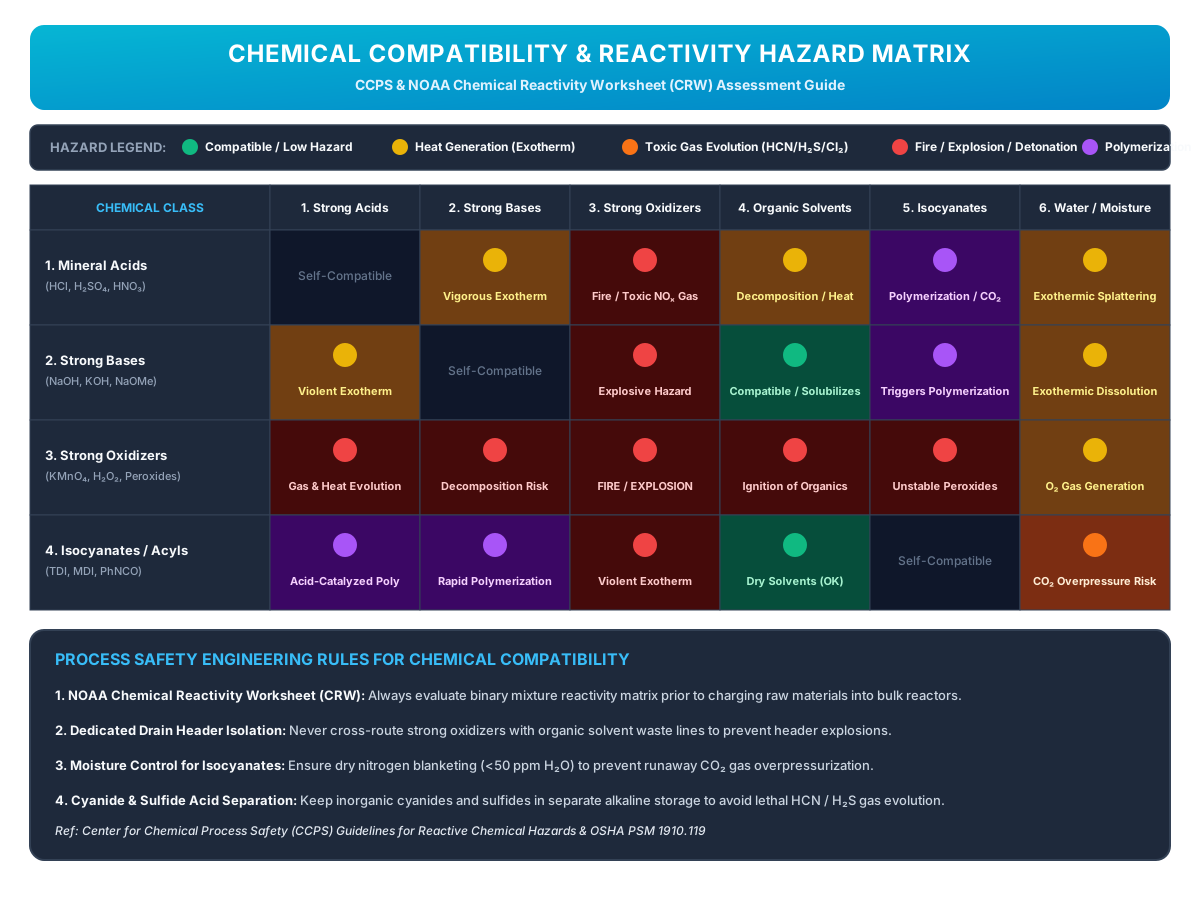
# 1. The Core Hazard Mechanisms of Chemical Incompatibility
When two incompatible chemical substances come into contact, several dangerous physical and chemical phenomena can occur:
- Exothermic Heat Generation: Rapid temperature rise leading to solvent boiling, vessel pressurization, or thermal runaway.
- Toxic Gas Evolution: Generation of lethal gas species such as Hydrogen Cyanide (), Hydrogen Sulfide (), Chlorine (), or Nitrogen Dioxide ().
- Flammable Gas Evolution: Generation of Hydrogen () or Acetylene () gas, creating immediate flammable vapor atmospheres inside enclosed equipment.
- Runaway Polymerization: Catalyzed polymerization of monomers (such as styrene, acrylic acid, or isocyanates), generating intense heat and solidifying equipment.
- Overpressurization & Explosion: Rapid gas generation exceeding vessel pressure relief valve (PRV) vent capacities.
# 2. Chemical Class Incompatibility Matrix
| Chemical Group | Incompatible Chemical Classes | Primary Hazard Consequences | Engineering Prevention Rule |
|---|---|---|---|
| Strong Mineral Acids () | Strong Bases, Cyanides, Sulfides, Organic Solvents | Violent Exotherm, Toxic Gas, Ignition | Separate drain headers & dedicated acid waste tanks |
| Strong Bases () | Acids, Isocyanates, Halogenated Solvents | Exotherm, Violent Polymerization, Dehydrohalogenation | Alkaline waste isolation; dedicated dosing lines |
| Strong Oxidizers () | Organic Solvents, Reducing Agents, Amines | Fire, Explosion, Rapid Gas Generation | Dedicated oxidizer storage; N₂ inerting |
| Isocyanates () | Water, Moisture, Amines, Strong Bases | Overpressurization, Violent Polymerization | Dry blanketing () |
| Water Reactive Metals () | Water, Alcohols, Acids | Flammable Gas, Spontaneous Fire | Anhydrous handling; mineral oil storage |
| Inorganic Cyanides () | Mineral Acids, Acid Salts | Lethal Gas Evolution | Keep at all times in solution |
# 3. Step-by-Step NOAA CRW Reactivity Assessment Workflow
flowchart TD
    A["Identify Raw Materials & Waste Streams"] --> B["Determine Chemical Reactive Groups (NOAA)"]
    B --> C["Generate Binary Compatibility Pairings"]
    C --> D["Evaluate Exotherm, Gas & Polymerization Hazards"]
    D --> E["Establish Piping, Vessel & Header Segregation"]

    style A fill:#e0f2fe,stroke:#0284c7,stroke-width:2px
    style B fill:#dcfce7,stroke:#16a34a,stroke-width:2px
    style C fill:#fef3c7,stroke:#d97706,stroke-width:2px
    style D fill:#fee2e2,stroke:#dc2626,stroke-width:2px
    style E fill:#f3e8ff,stroke:#9333ea,stroke-width:2px
- Inventory Collection: List all raw materials, solvents, reagents, products, intermediates, and potential decomposition products.
- Functional Group Assignment: Classify each compound using the NOAA Chemical Reactivity Worksheet (CRW) 43 reactivity groups.
- Binary Pairwise Analysis: Evaluate every pairwise combination in a matrix to identify heat generation, gas evolution, or polymerization potential.
- Process Engineering Integration: Enforce physical segregation in tank farms, pipe racks, and waste disposal headers based on matrix outputs.